

Talarico vs. Paxton: Different plans for Texas’ data center boom

Data centers have become a major talking point as their growth continues to expand across Texas, sparking debate surrounding who should have the final say in their regulation and what should be regulated.
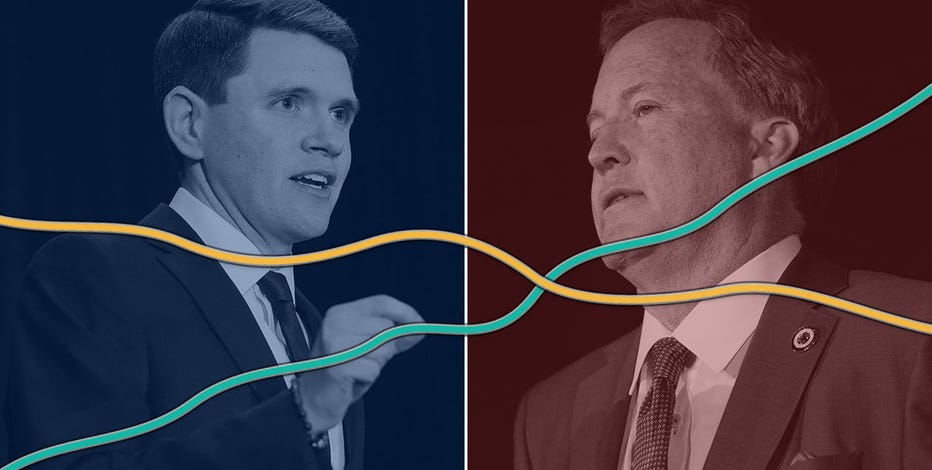
U.S. Senate candidates James Talarico and Ken Paxton both say data centers should not leave taxpayers and utility companies responsible for the cost of the industry's growth, but are offering voters different approaches to managing the impact of the industry on electricity, water, housing and local communities.
Why you should care:
The rapid expansion of data centers across Texas has raised questions from Texans about how much water and electricity are being used once the center is online. It's also left Texans asking if they will face higher utility bills, whether they have a say in new construction and if the state and local governments will continue to offer tax incentives to attract the industry.
Who leads 2026 Texas Senate race? Paxton vs. Talarico poll tracker
Polls have shown the hotly contested U.S. Senate race in Texas is in a dead heat.
How would Paxton regulate data centers?
Dig deeper:
Paxton’s four-point "Texas First Data Center Plan" combines proposed federal legislation with support for Gov. Greg Abbott’s state-level plan.
Paxton says he would:
- Prohibit the use of Chinese technology in American data centers and related infrastructure.
- Hold companies criminally liable if their facilities power AI chatbots that undermine children’s safety.
- Co-sponsor the DATA Act, which he says would reduce outdated federal regulations and create new power systems to prevent data centers from increasing Texans’ electricity costs.
- Support Abbott’s proposals to restrict data center construction in rural neighborhoods, require noise and light controls, improve traffic planning and emergency coordination, repeal sales tax exemptions and require data centers to fund their own electricity infrastructure.
Paxton also supports requiring data centers to add to Texas’ electric capacity rather than strain the existing grid. His plan calls for closed-loop water systems that would reuse water for cooling.
What they're saying:
"There's plenty of open space in Texas and other parts of the country that we can put data centers that do not create a different atmosphere for a neighborhood," Paxton said while speaking at the U.S. Hispanic Business Council on Sept. 28. "Eventually, we have to move forward with some type of reasonable restriction so that these data centers are not harming people."
How would Talarico regulate data centers?
Talarico released his "Hold Data Centers Accountable Plan" in July.
His proposal would:
- Repeal tax incentives for data centers and other large companies.
- Give local residents more input on data center construction in their communities.
- Require AI companies to pay for their own electricity and water infrastructure.
- Hold data centers accountable for polluting water.
- Create an AI Dividend that would give every American a share of the profits generated by American AI companies.
Talarico has argued that data centers are contributing to higher housing costs, putting pressure on small businesses and increasing utility bills.
What they're saying:
"Texas should be a leader when it comes to innovation and technology, but that only works if Texans get a say and get a share of that economic growth," Talarico said during a campaign stop in July.
How do the Paxton and Talarico plans differ?
Tax incentives
Both candidates now support repealing tax incentives for data centers.
Talarico has made the issue a central part of his criticism of Paxton, pointing to Paxton’s vote as a state lawmaker for the sales tax exemption that helped encourage data center construction.
Paxton’s campaign says his new plan would repeal sales tax exemptions and other outdated incentives.
Local control
Talarico wants local residents to have a greater say in whether data centers are built in their communities.
Paxton’s plan would support restrictions on building AI data centers in rural Texas neighborhoods and require companies to address issues such as noise, lighting, traffic and emergency response. His proposal does not specify whether local governments would have final approval authority.
Electricity and the power grid
Both candidates say data centers should pay for the power infrastructure they require.
Paxton’s plan calls for data centers to fund their electricity needs and add to Texas’ power capacity.
Talarico says AI companies should pay for their own electric infrastructure, so those costs are not passed on to consumers.
Water
Paxton supports closed-loop cooling systems, which are designed to reduce the amount of new water needed to operate a data center.
Talarico wants data centers held accountable for polluting water and says the industry should pay for its own water infrastructure.
National security and child safety
Paxton’s plan includes provisions that would prohibit Chinese technology from being used in American data centers and infrastructure.
It also would seek to hold companies criminally liable when data centers power AI chatbots that threaten children’s safety.
Those issues are not included in Talarico's proposals provided by his campaign.

Talarico vs. Paxton: Who has the better plan to lower costs?
In a Texas Senate race defined by the rising cost of everyday life, Ken Paxton and James Talarico are offering voters different approaches to affordability. Paxton is proposing new tax deductions, an expanded Child Tax Credit and permanent "Trump Accounts," while Talarico is calling for higher wages, expanded tax credits and tougher action against corporations he says are contributing to higher prices.
Who are the candidates targeting?
Paxton is appealing to voters concerned about China, artificial intelligence, child safety, rural development and the reliability of the Texas power grid. His plan also positions him alongside Abbott, whose administration has proposed its own restrictions on the industry.
Talarico is targeting voters concerned about rising utility bills, corporate tax breaks, local control and the effect of data centers on housing and small businesses.
Big picture view:
Paxton and Talarico agree that data centers should bear more responsibility for the electricity, water and infrastructure they use.
Their broader approaches are different.
Paxton is proposing federal action on national security and child safety while supporting state restrictions on rural development, water use and grid impacts.
Talarico is framing the issue as one of affordability and corporate accountability. His plan would end tax incentives, expand local input and create a public dividend from the AI industry.
The Source: Information in this article comes from releases by both campaigns. Comments made by Ken Paxton were made during an event with the U.S. Hispanic Business Council on Sept. 28, 2026. Comments made by James Talarico come from a campaign stop in July 2026.