

Texas school vouchers: Many applications were for early childhood education programs
New numbers shed light on TEFA applicants so far
The grade level with the highest number of applications was Pre-kindergarten (36,666 or 13.37 percent), but just over 50 percent of applicants (18,677) were deemed ineligible for funds. Pre-K made up for about 13.4 percen
Many Texas families applied for school vouchers to fund early education for their students, data from the Texas Comptroller's office shows.
The application window officially closed on March 31.
PREVIOUS REPORTING: Texas school voucher applications surge past 274,000 as initial deadline closes
Early education applications
What we know:
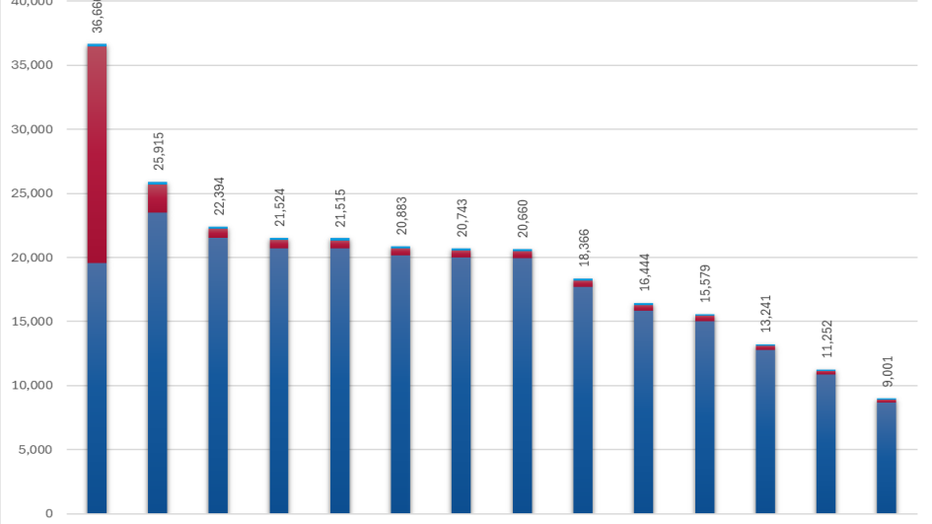
The grade level with the highest number of applications was Pre-kindergarten (36,666 or 13.37 percent), but just over 50 percent of applicants (18,677) were deemed ineligible for funds.
Pre-K made up for about 13.4 percent of the total number of applications.
The next highest was Kindergarten at 25,915 students or about 9.5 percent.
Other grade level breakdowns:
- Elementary School (1st-5th) — 107,059 or 39 percent
- Middle School (6th-8th) — 55,470 or 20.2 percent
- High School (9th-12th) — 49,073 or 17.9 percent
Data breakdown
By the numbers:
The Texas Comptroller's office released a comprehensive review of the application process on Friday.
Application/priority tier data
Over 274,000 eligible Texas students applied for school vouchers in the program's first year, with a record 43,000 students applying on the very first day.
Almost 25,000 students who applied were deemed ineligible or about nine percent, with just over 2,000 student applications still under review.
Students will be prioritized in four tiers:
- Children with a disability who are members of a household whose total annual income is at or below 500% of the Federal Poverty Level (FPL).
- Children who are members of a household whose total annual income is at or below 200% FPL.
- Children who are members of a household whose total annual income is between 200% and 500% FPL.
- Children who are members of a household whose total annual income is at or above 500% FPL. Children enrolled in a Texas public school or charter school for at least 90% of the prior school year will be prioritized within this group. Funds for children in this category may not exceed 20 percent of the amount of money appropriated from the program fund for that school year.
The Comptroller's office says that applications by tier broke down as:
- Tier 1 (Disability and 500% FPL or below) — 12%
- Tier 2 (At or below 200% FPL) — 32%
- Tier 3 (Between 200 and 500% FPL) — 29%
- Tier 4 (At or above 500% FPL) — 22%
- Tier 4.1 (At or above 500% FPL and enrolled in a public school) — 5%
Nearly 30,000 applicants qualified for Tier 1, while another 79,000 applicants qualified for Tier 2.
Student demographics
About 43,000 applications indicated that the student has a disability, with 80% of those indicating an active Individualized Education Program or IEP. Those students receive priority consideration for funds.
The data from the Comptroller's office also breaks down applicant demographics by household income, race/ethnicity, gender and by what educational setting they were applying for:
Household income
- 37% of applicants from families with incomes at or equal to 200% FPL
- 36% of applicants from families with incomes between 200 and 500% FPL
- 27% of applicants from families with incomes greater than 500% FPL
Race/ethnicity
- 45% White
- 23% Hispanic
- 12% Black
- 11% Multiracial
- 8% Asian/Pacific Islander
- 1% American Indian/Alaskan Native
Gender
- 51% Male
- 49% Female
Educational setting
- 77% seeking a private school spot
- 23% seeking funds for homeschool or other educational setting
School district demographics
The majority of the applications received were from students in the Houston area, with nearly 65,000 students applying. About 12,000 of those students attend schools in Houston ISD.
Other regions that saw high numbers of applications were:
- Richardson — 50,206
- Fort Worth — 37,836
- San Antonio — 30,815
- Austin — 24,025
The ten school districts that saw the highest numbers of applications were:
- Houston ISD — 12,267
- Dallas ISD — 8,617
- Fort Bend ISD — 8,429
- Northside ISD (San Antonio) — 6,955
- Cypress-Fairbanks ISD — 5,858
- North East ISD — 5,414
- Plano ISD — 5,206
- Katy ISD — 5,108
- Austin ISD — 4,896
- Fort Worth ISD — 4,803
What's next:
The Texas Comptroller's office is now working with Odyssey, the program’s certified educational assistance organization, to verify students’ information before notifying families regarding awards later in April and distributing funds to student accounts starting in July.
Available funding is expected to be exhausted within the second priority tier, so a lottery will be used to allocate any remaining funds within that second tier and to establish a waitlist for remaining students.
That waitlist will then be reported to the Texas Legislature.
The backstory:
The Texas Education Freedom Accounts (TEFA) program, established by Senate Bill 2, allows eligible families to receive state funds to pay for eligible educational costs. Funds are deposited into a secure account managed by the state, called an Education Savings Account (ESA). Parents can then access this account to direct payments to the private school or approved educational vendor.
In its first year, the TEFA program will be capped at $1 billion and used by up to 90,000 students. Students who are accepted into the program and remain in good standing will not need to reapply each year. If there are more applicants than spots available, priority will be given to families based on their adjusted gross income.
RELATED STORIES
- Demand surges for Texas Education Freedom Accounts with 123,000+ student applications filed
- Judge orders Texas to extend deadline on school voucher program
- Texas Democrats accuse comptroller of excluding Islamic schools from voucher program
Schools participating in the TEFA program will accept voucher funds for the 2026-27 school year.
Nearly 800 Texas private schools signed up to begin accepting public money under the program, according to a map released by the state comptroller’s office.
Qualified students will be able to receive up to $10,474 to put toward private school costs. Funds remaining at the end of the school year will roll over as long as the child remains in the TEFA program.
Applications were opened on Feb. 4 and closed on March 31.
Approved educational expenses
Big picture view:
The TEFA program, administered by the Texas Comptroller of Public Accounts, is expected to be the largest day-one school choice initiative in the nation.
Through this program, parents who choose to enroll their children outside the public school system and are accepted into the program, can use their child’s TEFA funds to pay for approved education-related expenses through the program marketplace.
Approved education-related expenses can include:
- Tuition and fees at a private school, higher education provider, online educational course or program, or program that provides training for an industry-based credential approved by the Texas Education Agency.
- Textbooks or other instructional materials.
- Required uniforms.
- Fees for classes provided by school districts that do not qualify the child to be included in the school’s average daily attendance.
- Academic assessment costs.
- Private tutoring.
- Transportation to/from approved providers.
- Educational therapies that are not covered by any federal, state, or local government benefits (i.e, Medicaid).
- Computer hardware or software (must not exceed 10 percent of the total amount transferred to the child’s account that year).
- Meals provided by a private school.
The Source: Information in this report comes from the Texas Comptroller's office and previous reporting by FOX Television Stations.