

Texas man sentenced in violent border monopoly case involving fire bombings, murder
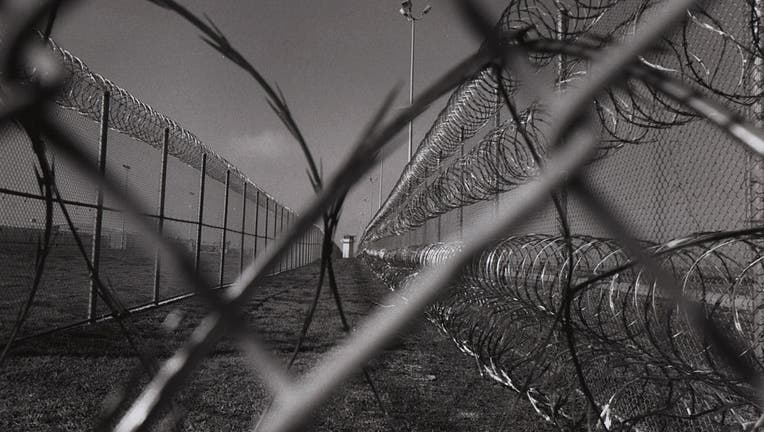
A guard tower and razor wire at a prison in Texas. (Photo by Andrew Lichtenstein/Corbis via Getty Images)
A San Benito man was sentenced Tuesday to 30 months in federal prison for his role in a violent, long-running conspiracy to monopolize the "transmigrante" industry at the South Texas border, a case that has already seen its ringleader sentenced to over a decade behind bars.
Roberto Garcia Villarreal, 59, was also ordered by U.S. District Judge George C. Hanks Jr. to pay a $50,000 criminal fine. Villarreal previously pleaded guilty in February 2025 to charges of price fixing, conspiracy to monopolize the market, and extortion.
The backstory:
The sentencing is the latest development in a sprawling federal investigation into a criminal syndicate that seized control of the Los Indios Bridge near Harlingen and Brownsville. The group targeted the transmigrante trade, which is a U.S.-based agency that processes customs paperwork for clients transporting used vehicles and goods through Mexico for resale in Central America.
Ring leader sentenced
The enterprise was led by 39-year-old Carlos Martinez of Mission, the son-in-law of a former Gulf Cartel leader. Martinez was sentenced in June 2025 to11 years in federal prison and ordered to pay a $2 million fine.
According to court documents, Martinez and his co-conspirators, including Villarreal, operated a centralized entity known as the "Pool." The group used the Pool to fix prices for forwarding services and eliminate legitimate competition. Agencies that refused to comply were forced to pay a "piso," an extortionate "tax," on every transaction.
"Kidnapping, beatings, firebombings, and even murder"
Federal prosecutors described a campaign of "economic and physical violence" used to enforce the monopoly. While Villarreal was part of the price-fixing and market allocation efforts, the broader conspiracy led by Martinez utilized kidnapping, beatings, firebombings, and even murder to maintain control. Clients who did not comply with the Pool's rules faced consequences ranging from stolen vehicles to being denied access to the international bridge.
What they're saying:
"Roberto Garcia Villarreal chose to join a criminal enterprise that seized control of an industry through threats and violence, rigged prices against legitimate businesses, and laundered its proceeds—and now, he is headed to federal prison," said U.S. Attorney Nicholas J. Ganjei of the Southern District of Texas. "Today’s sentence serves as proof that no participant of this conspiracy will walk away without consequence. Although, the conspiracy may be finished, the Southern District of Texas is just getting started."
Martinez personally collected at least $9.5 million in extortion payments, which he and his family laundered through various bank accounts to disguise the illicit source of the funds.
To date, eight people have been convicted in the case. While seven have been sentenced, three other defendants, Rigoberto Brown, Miguel Hipolito Caballero Aupart, and Diego Ceballos-Soto, remain fugitives.
The investigation was conducted by Homeland Security Investigations (HSI) and the FBI. Authorities continue to seek information regarding the remaining fugitives.
What you can do:
Anyone with information in connection with this investigation should contact the HSI Tip Line at 866-347-2423; the FBI Tip Line at tips.fbi.gov or by contacting the FBI San Antonio Field Office at 210-225-6741; or the Antitrust Division’s Complaint Center at 888-647-3258, or visit www.justice.gov/atr/report-violations.
Whistleblowers who voluntarily report original information about antitrust and related offenses that result in criminal fines or other recoveries of at least $1 million may be eligible to receive a whistleblower reward. Whistleblower awards can range from 15 to 30 percent of the money collected.
For more information on the Antitrust Whistleblower Rewards Program, including a link to submit reports, visit https://www.justice.gov/atr/whistleblower-rewards.
The Source: Information in this article is from the U.S. Attorney's Office, Southern District of Texas.