

NASA honors fallen astronauts at annual Day of Remembrance
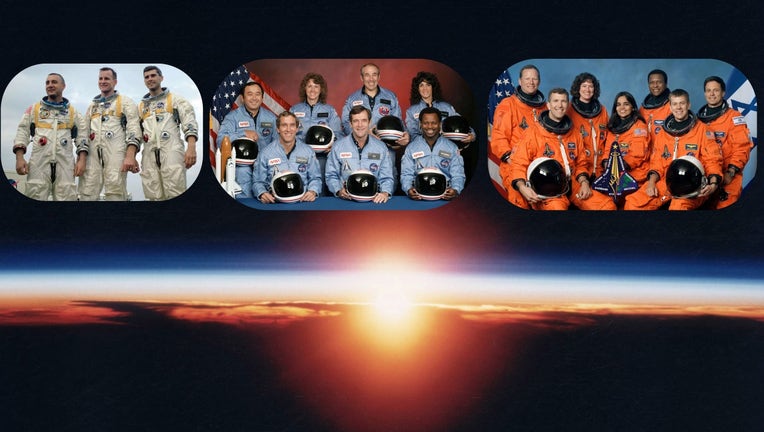
NASA observed its annual Day of Remembrance on Thursday, Jan 22, 2026 to commemorate the astronauts killed in the Apollo 1, space shuttle Challenger, and space shuttle Columbia accidents. (NASA)
NASA observed its annual Day of Remembrance Thursday to commemorate the astronauts killed in the Apollo 1 and space shuttles Challenger and Columbia accidents.
The backstory:
The annual event is held on the fourth Thursday of January with ceremonies held at the Johnson Space Center in Houston, Kennedy Space Center in Florida, Ames Research Center in California’s Silicon Valley, Langley Research Center in Hampton, Virginia, the Marshall Space Flight Center in Huntsville, Alabama, and the Stennis Space Flight Center in Bay St. Louis, Mississippi.
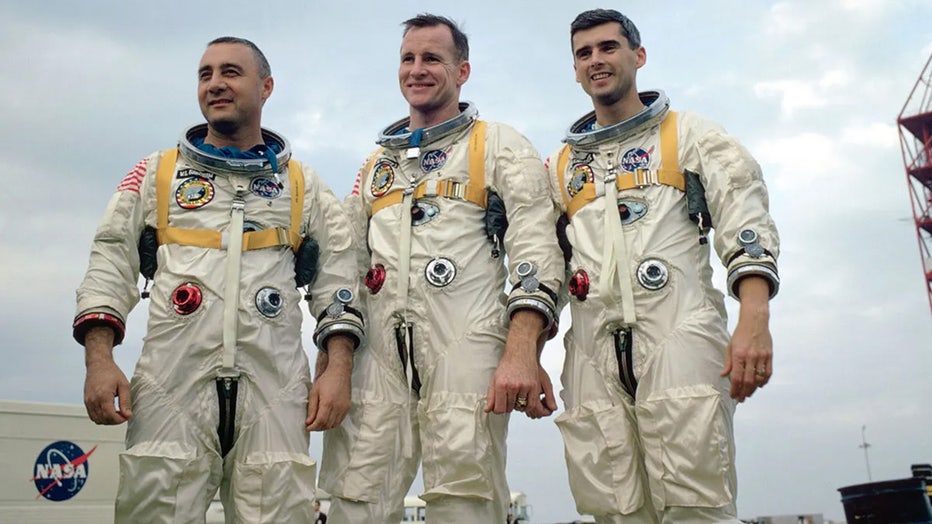
(L-R) Apollo 1 astronauts Virgil I. "Gus" Grissom, left, Edward H. White, and Roger B. Chaffee pose for photographers during a media event at Launch Complex 34. (NASA)
Apollo 1
On Jan. 27, 1967, astronauts Gus Grissom, Ed White, and Roger Chaffee were sitting atop the launch pad for a preflight test of Apollo 204 (AS-204) when a fire broke out in the capsule.
NASA’s extensive investigation determined an electrical short caused a spark which ignited the combustible materials and pure oxygen in the capsule.
The tragic accident led NASA engineers to make major design and engineering changes to make the Apollo spacecraft safer for missions to the Moon.
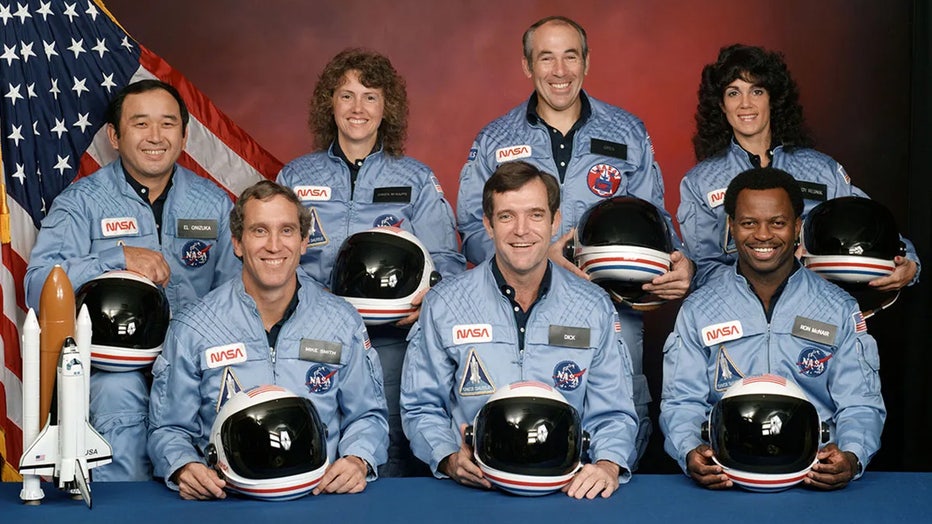
STS-51L Crew Back Row: Mission Specialist Ellison S. Onizuka, Payload Specialists Christa McAuliffe and Gregory B. Jarvis, Mission Specialist Judith A. Resnik, Front Row: Pilot Michael J. Smith, Commander Francis R. Scobee, Mission Specialist Ronald
Space Shuttle Challenger
On Jan. 28, 1986, astronauts Mike Smith, Dick Scobee, Ron McNair, Ellison Onizuka, Greg Jarvis and Judith Resnik, along with schoolteacher Christa McAuliffe, were set for a routine mission.
McAuliffe was a social studies teacher from Concord, New Hampshire, who was selected from among 10,000 others who applied to teach two lessons from orbit and then spend the next nine months lecturing students across the U.S.
Space Shuttle Challenger took off at 11:38 a.m. and 73 seconds later, the shuttle exploded in the air.
NASA later determined that the explosion was caused by an issue with an O-ring that allowed pressurized hot gas to escape and ignite the solid rocket booster.
President Ronald Reagan eulogized the crew during a nationally televised address, reading a quote from John Gillespie Magee’s poem High Flight: "We will never forget them, nor the last time we saw them, this morning, as they prepared for the journey and waved goodbye and 'slipped the surly bonds of earth' to 'touch the face of God.' "
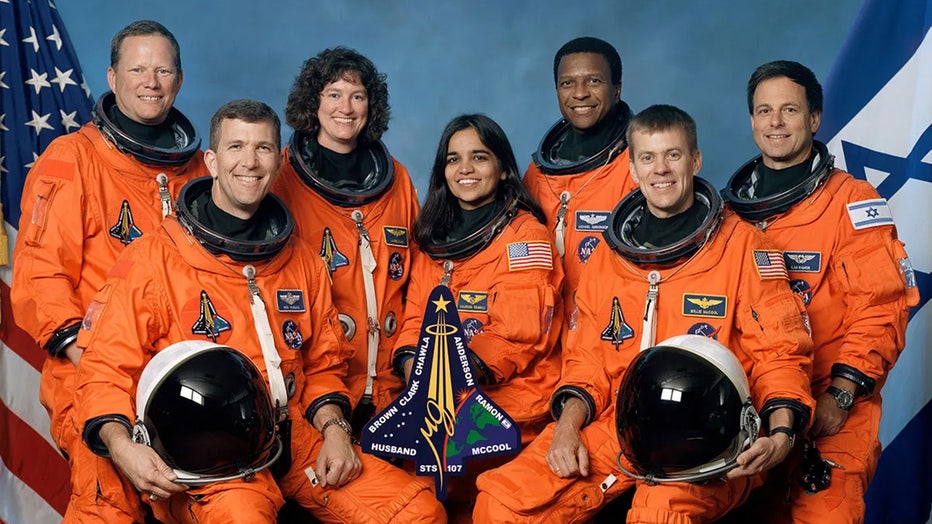
STS-107 Crew (L-R): Mission Specialist 1 David M. Brown, Commander Rick D. Husband, Mission Specialist 4 Laurel Blair Salton Clark, Mission Specialist 2 Kalpana Chawla, Payload Commander Michael P. Anderson, Pilot William C. McCool, Payload Specialis
Space Shuttle Columbia
The seven-member crew of Columbia, Commander Rick Husband, Pilot William McCool, Payload Commander Michael Anderson, and Mission Specialists Kalpana Chawla, David Brown, Laurel Clark, and Payload Specialist Ilan Ramon, who was the first Israeli astronaut, took off from the Kennedy Space Center on Jan. 16, 2003.
During the launch, a piece of foam from the shuttle's orange external tank broke off and slammed into the left wing of the orbiter. NASA's engineers spotted the incident on launch footage — the impact sent a cloud of debris into the air as the shuttle continued upwards — but did not realize that it had punched a hole in the leading edge of Columbia's wing.
On the morning of Feb. 1, 2003, Columbia was just 16 minutes from landing at the Kennedy Space Center, when Mission Control lost contact with the shuttle Columbia.
By the time Mission Control was aware that Columbia was overdue, fiery white streaks had appeared in the skies over Texas, as Columbia disintegrated, killing all seven on board. Pieces of the craft fell from the skies over eastern Texas and western Louisiana.
The investigation determined that NASA had underestimated the potential danger of the foam debris, which had been a problem on a number of other launches.
The review board also looked at whether the astronauts could have been saved if NASA had known about the wing damage. Had they taken immediate action, they decided, it could have been possible to pull space shuttle Atlantis out of processing and launch it on an unprecedented rescue mission, though there would have been no way to get Columbia itself home.
They also determined that Columbia's astronauts could have attempted a risky on-orbit repair themselves, but there was no guarantee that it would have worked.
During an address to the nation, President George W. Bush said, "Mankind is led into the darkness beyond our world by the inspiration of discovery and the longing to understand. Our journey into space will go on."
The Source: Information in this article was sourced from NASA and includes previous FOX Local reporting. This story was reported from Orlando.