

4th of July cookout: Tips for practicing safe food handling when grilling and hosting gatherings
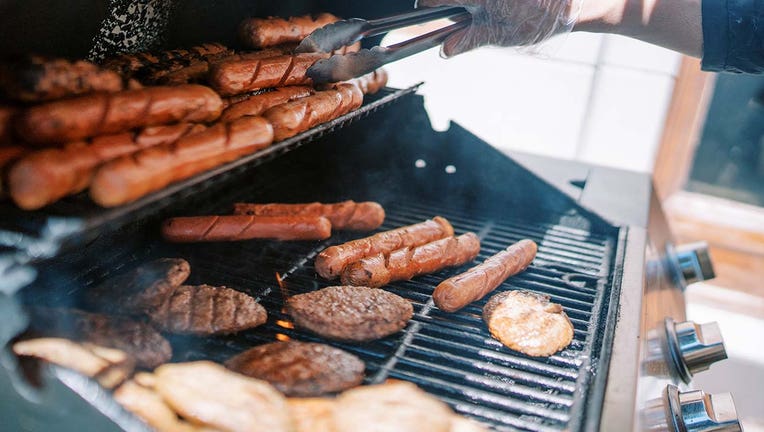
Grilling sausages and burgers on charcoal gloved hand turning skewers, sizzling patties and toasted buns, smoky golden glaze, closeup
Americans across the country will celebrate the nation’s milestone 250th birthday this weekend, hosting family and friends outdoors with BBQ and cookouts. There are simple steps you can take to prevent food-borne illness and keep everyone safe.
What they're saying:
"Keeping perishables in coolers or insulated containers, following a two-hour rule (or one hour when temperatures are above 90 F), and grilling meats to safe internal temperatures are easy ways to protect friends and family from harmful bacteria," said Dr. Mindy Brashears, USDA Under Secretary for Food Safety.
How to keep cookout food safe
The U.S. Department of Agriculture’s (USDA) Food Safety and Inspection Service (FSIS) has several safety tips when it comes to marinating, cooking, and serving foods.
Marinating food safety tips
- Always marinate meat in the refrigerator, never on the counter or at room temperature.
- Marinade used on raw meat or poultry must be boiled for a few minutes to destroy any harmful bacteria before reusing as a sauce or dip.
Food cooking safety tips
- Raw meat and poultry must reach a safe minimum internal temperatureto ensure all harmful bacteria is killed during the grilling process.
- Use a food thermometer to check the internal temperature in multiple spots:Beef, pork, lamb, and veal steaks, chops and roasts: 145 degrees FSeafood (fish and shellfish): 145 degrees FGround beef, pork, lamb and veal: 160 degrees FPoultry (whole and ground): 165 degrees F
- Beef, pork, lamb, and veal steaks, chops and roasts: 145 degrees F
- Seafood (fish and shellfish): 145 degrees F
- Ground beef, pork, lamb and veal: 160 degrees F
- Poultry (whole and ground): 165 degrees F
Serving food safely tips
- Use a clean platter for cooked foods. Never place cooked items on the plate that held raw meat or poultry, because harmful bacteria can cross-contaminate onto the cooked food.
- Avoid the Danger Zone: Harmful bacteria multiply rapidly between 40 degrees F and 140 degrees F and can cause illness if foods stay in the Danger Zone for more than two hours (or one hour above 90 degrees F).
- If serving perishable food for more than two hours (or one hour above 90 degrees F), keep hot foods hot and cold foods cold:Keep hot foods at or above 140 degrees F using chafing dishes, slow cookers, or a preheated grill.Keep cold foods at or below 40 degrees F by placing dishes on ice or keeping them in a cooler near the serving area.
- Keep hot foods at or above 140 degrees F using chafing dishes, slow cookers, or a preheated grill.
- Keep cold foods at or below 40 degrees F by placing dishes on ice or keeping them in a cooler near the serving area.
The Source: Information in this article was provided by the U.S. Department of Agriculture’s (USDA) Food Safety and Inspection Service (FSIS). This story was reported from Orlando.