

Texas fall weather forecast: What experts are saying about autumn weather in 2026
AUSTIN, Texas - The sweltering summer heat has been relentless in Texas during August, but a new forecast has given us a glimmer of hope.
NOAA’s Climate Prediction Center has released its seasonal outlook for the three-month period of September to November, showing temperature and precipitation trends that are expected during autumn.
When will Texas cool down?
What we know:
According to the CPC, just above everyone in the U.S. will experience above-average temperatures during the fall. However, the bull’s-eye for the highest chances for above-average temperatures shifts away from Texas and toward the Northwest U.S.
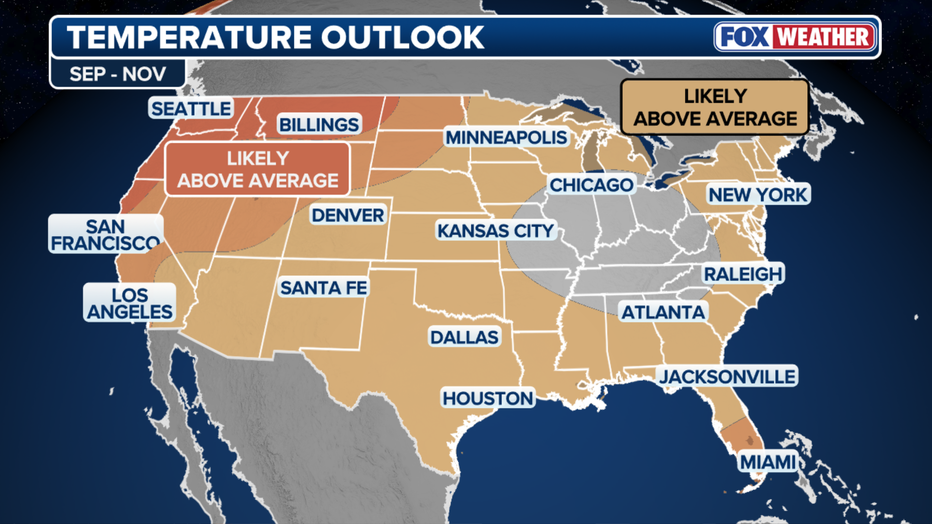
The temperature outlook for September, October and November 2026. (NOAA/Climate Prediction Center / FOX Weather)
Will it be a wet fall in Texas?
What they're saying:
When it comes to precipitation, things look a lot closer to average for the bulk of the U.S.
According to the CPC, much of Texas will likely experience average precipitation. The only places that might get above-average precipitation in Texas are the Panhandle, down to the Big Bend region and west toward El Paso.
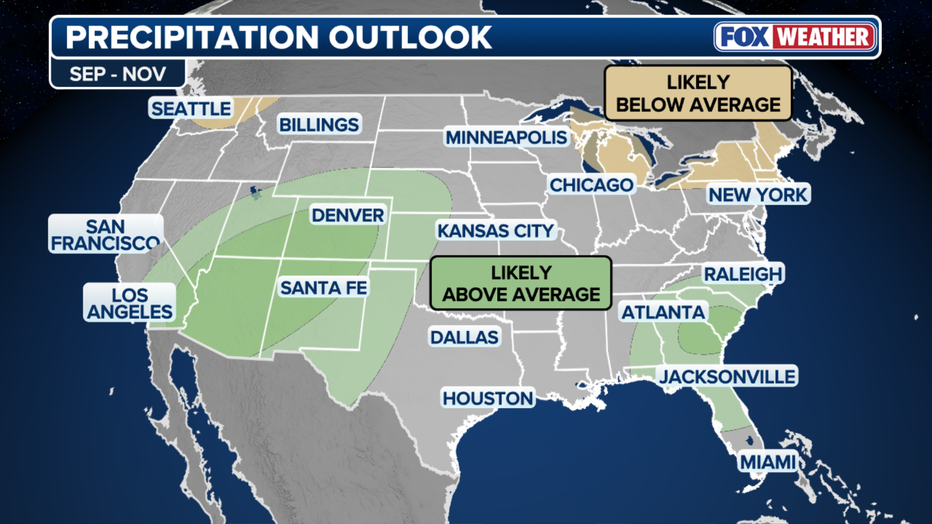
The precipitation outlook for September, October and November 2026. (NOAA/Climate Prediction Center / FOX Weather)
How El Niño factors into Texas’ fall
Dig deeper:
El Niño is warming of the waters in the Central Pacific. The phenomenon has big impacts on the weather across the Lower 48.
According to the CPC, El Niño has already and is strengthening. It’s a near certainty that a very strong El Niño will develop this fall and winter.
Typically, an El Niño means cooler and wetter weather for Texas because of an active southern jet stream. However, with a forecast of average precipitation and above-average temperatures, it appears the impacts of the warmer Pacific might come to Texas during the winter this time around.
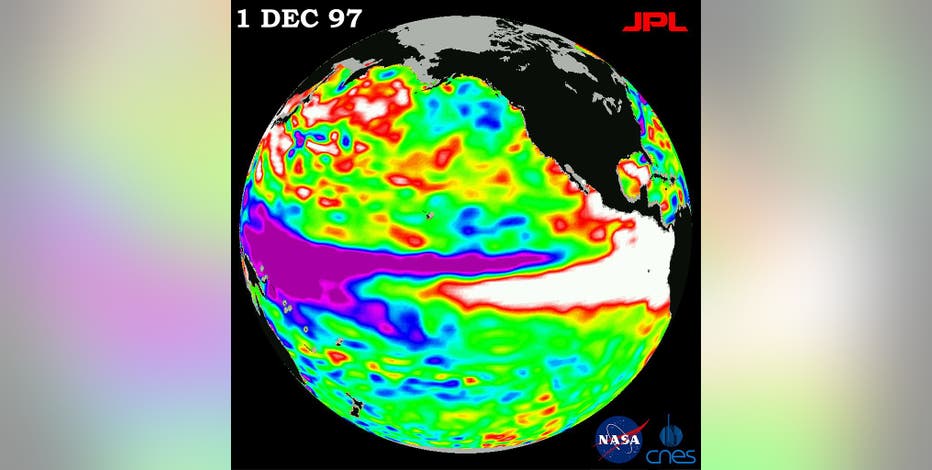
Here's what you need to know about El Nino/La Nina in Texas
El Nino and La Nina are the most famous and most influential to Texas’ weather. So what are they?
When does fall start?
What's next:
Meteorological fall begins Sept. 1. Meteorologists and climatologists use this date as the start of fall for the ease of record keeping.
Astronomical fall begins Sept. 22. That is when the autumnal equinox happens, and we experience equal hours of daylight and nighttime.
The Source: Information in this story came from the Climate Prediction Center and FOX Weather.