

Used SpaceX rocket will soon slam into the moon, but not on purpose
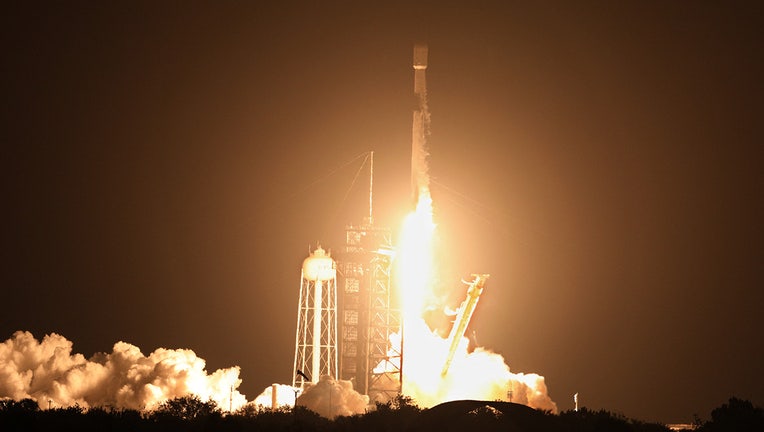
A SpaceX Falcon 9 rocket, carrying Firefly Aerospace's Blue Ghost and ispace's Resilience lunar landers, lifts off from Launch Complex 39A at the Kennedy Space Center in Cape Canaveral, Florida, on January 15, 2025. (Photo by Gregg Newton / AFP) (Pho
A large piece of a SpaceX rocket will likely make a crash landing this week — but it is not expected to smash into Earth soon. Instead, the rocket’s upper stage will collide with the moon.
Big picture view:
On Wednesday, the rocket’s upper stage is expected to slam into the moon near Einstein Crater with the force of three tons of TNT. Space tracking expert Bill Gray said the segment will likely be going 5,400 mph, or around seven times the speed of sound, at the time of the collision.
SpaceX did not plan on a lunar collision course, and experts pointed out that the crash could have been avoided with a small nudge that put the rocket stage into an orbit around the sun.
RELATED: Social Security COLA 2027: How much payments are projected to increase
Why you should care:
Nevertheless, scientists are excited to see what happens. The flash from the impact will last less than a second. Even though it is happening on the near side of the moon, it will probably be too dim to see.
The stream of debris from the crash may stretch for miles and could be visible for several minutes, Los Alamos National Laboratory’s Benjamin Fernando predicted. He is encouraging professional and amateur astronomers to check out the event and says important information can be learned for future lunar missions.
What they're saying:
"The gravity on the moon is low and there is no wind to blow the dust away," he explained. "Part of the reason for our interest in this event is to figure out how much of a hazard debris impacts pose to future astronauts."
Fernando added that he expects the resulting impact crater to be about 90 feet wide and 16 feet deep.
The backstory:
The launch that sent the rocket section on its eventual, unintentional rendezvous with the moon departed on January 15, 2025, and carried two pieces of equipment that were supposed to end up on the moon. One of the lunar landers on board, Firefly Aerospace’s Blue Ghost, went on to become the first private spacecraft to successfully land on the moon, while the other, which was made by Japan-based ispace, wrecked.
Dig deeper:
This is the second known time that a rocket part inadvertently struck the moon. In 2022, a Chinese rocket segment struck the dark side of the moon.
The Source: Information for this article was taken from The Associated Press. This story was reported from Orlando.