

Texas prisons must be air conditioned by 2029, federal judge orders
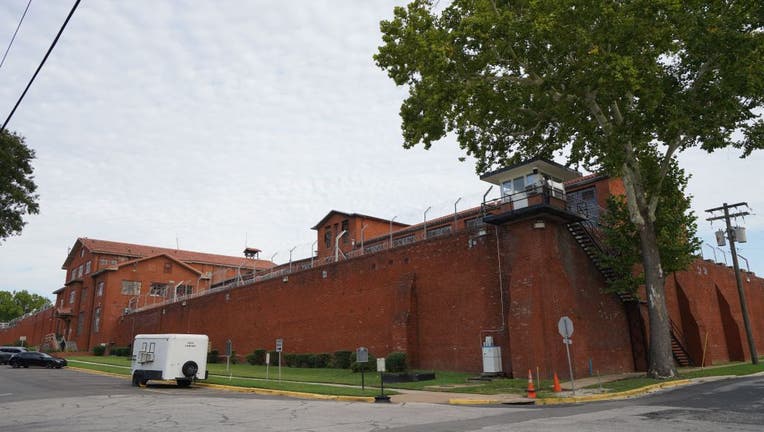
The Huntsville Unit prison in Huntsville, Texas, is seen on September 14, 2024. (Photo by Francois PICARD / AFP)
A federal judge has ruled that conditions in Texas prisons without air conditioning violate inmates’ constitutional rights and ordered the Texas Department of Criminal Justice to install air conditioning throughout its prison system by the end of 2029.
Texas prisons without air conditioning violate the Eighth Amendment
U.S. District Judge Robert Pitman said extreme heat in the prisons poses an unreasonable risk of serious injury or death and that TDCJ’s current efforts to protect inmates are inadequate. The order affects tens of thousands of inmates and requires TDCJ to begin reporting its progress to the court next year.
Pitman said Texas prisons without air conditioning violate the Eighth Amendment, which protects against cruel and unusual punishment.
"The Eighth Amendment does not mandate prisons that are pleasant, or even comfortable—but it does mandate prisons that are not subjecting inmates to such intolerable conditions that they resort to soaking themselves in toilet water or starting fires in their own cell blocks to seek relief," Pitman wrote.
The prison agency must immediately create and implement a plan to add air conditioning to every TDCJ prison. The installation must be completed by Dec. 31, 2029.
The backstory:
Last year, Pitman ruled that keeping Texas inmates in prisons that lack air conditioning during excessive heat was unconstitutional. However, he did not require the prison system to install temporary air conditioning while the court case continued.
Forcing the prison system to install temporary air conditioning units would just slow down the work of the prison system to implement a permanent solution and wouldn’t provide relief any earlier, the court said at the time.
What they're saying:
"This is a historic, landmark decision and a victory for every incarcerated person in Texas," Lioness Justice Impacted Women's Alliance Executive Director Jennifer Toon said. Toon's organization was one of the plaintiffs in the lawsuit.
Dr. Amite Dominick, Founder and President of Texas Prisons Community Advocates, said the organization would be "watching every deadline" from the order.
"This decision affirms what incarcerated people, their families, and our research have said for years: the extreme heat in Texas prisons is deadly, and air conditioning is the only real remedy," Dominick said. "The Court has now made clear that the state cannot keep treating human lives as a budget line."
Judge orders Texas to air condition its prisons by 2029
What's next:
Under Pitman’s order, TDCJ must submit status reports to the court every six months. The first report is due March 22, 2027. Pitman said he would not dictate the agency’s approach or appoint a special master to monitor its progress at this time.
Court documents say approximately 88,697 inmates—about 63% of the inmate population—were living in non-air-conditioned housing. Heat indexes near TDCJ prisons reached 134 degrees, while indoor temperatures routinely exceeded 85 degrees.
Over the past three summers, court documents state more than 15,000 heat-related grievances were filed.
What they're saying:
"The negative effects of heat are not limited to health effects: extreme heat also subjects TDCJ inmates to inhumane and degrading conditions even where it does not directly cause immediate physical injuries," court documents state.
The court said it was "unknown" how many deaths occurred in Texas prisons because of heat exacerbating underlying health conditions.
TDCJ said 23 people died in its facilities from heat-related causes between 1998 and 2012. The agency also acknowledged three heat-related deaths in 2023. Evidence presented by the plaintiffs identified at least six additional heat-related deaths between 2023 and 2025, though the court said the total number of deaths in which heat exacerbated underlying health conditions remains unknown.
An estimated 100,000 inmates had heightened vulnerability to heat based on medical conditions, mental health conditions and medications.
Pitman wrote that TDCJ had failed to meaningfully investigate and document the scope of the heat problem, continued relying on insufficient mitigation measures and had not acted reasonably to install air conditioning.
TDCJ presented a two-phase plan estimating it would need $774.3 million for air-conditioning during the 2028-29 cycle. But the agency’s actual request to the Legislature sought $298.02 million, less than half that amount. The chairman of the board overseeing TDCJ also disputed that the document was a true plan, describing it as "something a little bit more than swag." The judge said the discrepancy showed TDCJ had not made a credible commitment to completing systemwide air conditioning.
The other side:
TDCJ spokesperson Amanda Hernandez said the agency disagreed with the court's ruling that it was deliberately indifferent and would be appealing the ruling.
"TDCJ is committed to installing air conditioning in units and has increased the number of air-conditioned beds from 35,000 in 2018 to an anticipated 60,000 by the end of this year. This number will reach 90,000 in 2028," Hernandez said. "TDCJ has robust heat mitigation efforts in place to protect the safety of its population and staff. The agency continues improving heat mitigation measures to ensure they are effective, consistent and ingrained in operations."
The agency did not say whether it would seek to pause the order while an appeal is pending.
The Source: Information in this article comes from court documents filed in the U.S. District Court of the Western District of Texas. Comments from the plaintiffs come from statements released by those organizations. Information on TDCJ's intention to appeal comes from a statement from the agency.