

Texas highway funding saved more than 3500 lives, billions in costs, report finds
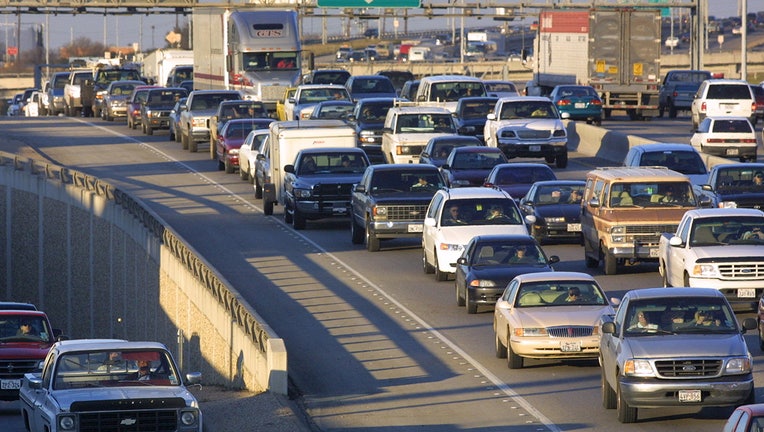
Traffic backs up on southbound highway 35 in Austin, Texas. (Credit: Joe Raedle/Newsmakers via Getty Images)
AUSTIN - Increased transportation funding approved by Texas voters a decade ago has saved the state’s residents more than $18 billion annually and prevented thousands of traffic fatalities, according to a new study released this month.
"Saving Texans' Lives, Time and Money"
Big picture view:
The report, "Saving Texans' Lives, Time and Money," published by the national transportation research nonprofit TRIP, credits Propositions 1 and 7 with providing a critical financial lifeline for the state’s aging infrastructure. Since their enactment, these measures have pumped nearly $40 billion into the State Highway Fund by diverting portions of oil and gas severance taxes and sales tax revenues.
By 2024, these voter-approved funds accounted for nearly half of the Texas Department of Transportation’s (TxDOT) $12.5 billion Unified Transportation Program budget.
"The additional state funding allowed Texas to improve critical components of the state’s transportation system," the report stated, noting that the investment has translated into direct savings for households through improved safety, smoother pavements, and reduced congestion.
Featured
One Texas city makes list of top travel destinations for 2026
While 76% of Americans plan to vacation in 2026, more than half cite price as their top priority, fueling interest in "hidden gems" and off-season travel.
Safety and lives saved
By the numbers:
The most significant impact highlighted in the study is the reduction in traffic fatalities. TRIP estimates that roadway safety improvements funded by Propositions 1 and 7 saved 3,565 lives between 2015 and 2023.
Without these investments, which include features like rumble strips, turn lanes, and improved intersection layouts, the study suggests the state’s traffic fatality rate would have been significantly higher. In 2023 alone, an estimated 977 lives were saved due to these safety enhancements.
The reduction in crashes also saved Texans approximately $9.3 billion in economic costs last year, including medical expenses and productivity losses.
What did this cost you?
On average, a Texas household saves $2,301 annually because of infrastructure improvements. These savings are broken down into four key areas:
- Traffic Safety: $828 saved per household in avoided crash-related costs.
- Congestion Relief: $1,264 saved in Austin and $1,035 in Houston through reduced travel delays and wasted fuel.
- Vehicle Operating Costs: $266 saved on average statewide due to smoother roads that cause less wear and tear on vehicles.
- Bridge Maintenance: $58 saved through more efficient routes and lower repair costs.
Infrastructure progress and challenges
The report found that the number of bridges in "poor" condition dropped by 32 percent since 2015. Additionally, more than 1,800 new bridges were constructed over the last decade to handle the state’s booming population.
However, the study warns of looming challenges. While the current investment has been effective, highway construction costs have surged by 48 percent since early 2022 due to inflation. Furthermore, revenue from the state’s motor fuel tax is expected to shrink as vehicles become more fuel-efficient and the use of electric vehicles increases.
Texas’ population reached approximately 31.3 million in 2024, a 50 percent increase since 2000. With vehicle travel now exceeding pre-pandemic levels, the report concludes that continued investment is essential for the state to remain economically competitive.
"Approximately 5.4 million full-time jobs in Texas in key industries like tourism, retail, and manufacturing are dependent on the quality and reliability of the state’s transportation network," the report noted.
The Source: Information in this article is from TRIP ® of Washington, DC.