

New study reveals why dangerous fungus is so difficult to treat

Candida auris: What you should know about the fungus
About the potentially deadly fungus Candida auris or "C. auris" LiveNOW's Andy Mac spoke with Washington Post health reporter Fenit Nirappil about the fungus, its symptoms and how dangerous it is for people in the hospital and for healthy people. More LiveNOW from FOX streaming video
Researchers have discovered a previously unknown mechanism that allows the potentially deadly fungus Candida auris to survive antifungal treatment, potentially opening the door to new ways of tackling drug-resistant infections.
The study, led by the University of Exeter and City St George’s, University of London, found that the fungus can create multiple copies of its entire genome and may increase its chances of developing mutations that help it evade drugs.
The findings were published on Oct. 15 in Nature Communications.
Fungal outbreak in more than 60 countries
Big picture view:
The fungus, which was first identified in 2008, has caused outbreaks in more than 60 countries and is considered a critical-priority fungal pathogen by the World Health Organization.
It poses a particular threat to vulnerable hospital patients because it can spread between people, persist on skin and medical equipment, and prove difficult to eradicate.
What they're saying:
Study author Dr. Hugh Gifford said, "Candida auris is rare in the general population, but it’s a deadly threat to patients in intensive care units. It clings to patient skin and surrounding equipment, and can be transmitted from person to person – it’s incredibly hard to eradicate. If infection enters a vulnerable patient’s blood stream, there is a 45 per cent death rate."
He added, "Outbreaks in intensive care units have been costly and highly disruptive. One unit in the UK had to close and undergo complete refurbishment to stop the outbreak, while another outbreak was estimated to cost £1 million to control."
Researcher left cells incubating, returned to find cells grew
The backstory:
The research team was initially testing for drug resistance when a researcher accidentally left plates of cells incubating for longer than the required test period.
The researcher returned to find that cells had unexpectedly grown during this additional time period. They were surprised to find that further testing showed the deadly fungus had survived antifungal treatment by creating multiple versions of its own genome, thereby increasing its chances of mutating to evade the drug and survive.
Further testing revealed multiple populations of surviving cells, including faster-growing variants with mutations in a gene called "Crazy-one," or CRZ1, which plays a role in fungal cell-wall integrity. The researchers said the fungus’ multiple genome copies may increase the chances that mutations emerge that help some cells withstand treatment.
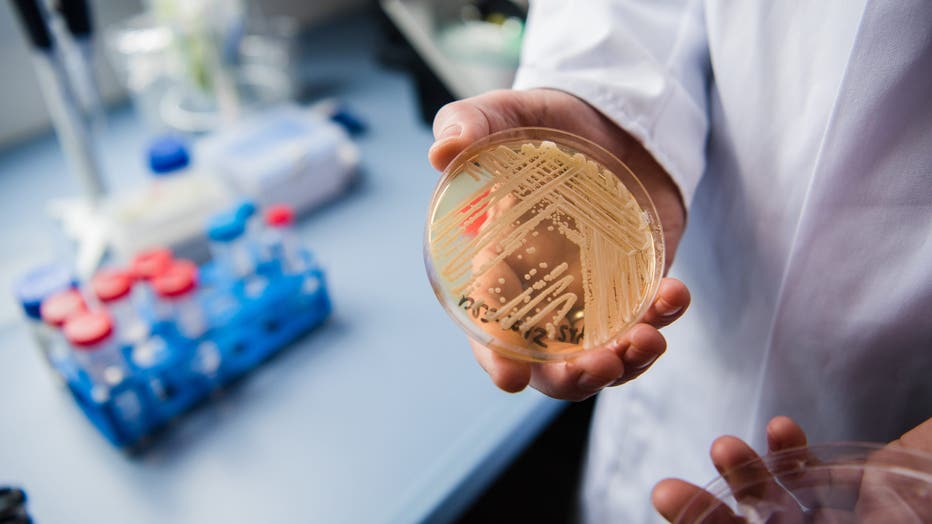
The findings may lead to improved antifungal drugs and combination treatments to control outbreaks in hospitals. (Credit: Nicolas Armer/picture alliance via Getty Images)
Dr. Sarah Murphy, a former postdoctoral researcher at City St George’s University of London and a co-author of the study said, "We initially set out to investigate why antifungal drugs weren’t working to kill Candida auris, despite laboratory tests showing that they were not resistant and that the drugs should have been effective. We were surprised to discover an entirely new mechanism for this fungus to survive – particularly with luck playing a big part of the discovery. We tested the fungus against very high concentrations of antifungal drugs. We were amazed to find there was a tiny population of cells that appeared over several days and continued to grow. Our discovery means we need to now look at new ways of treating people and eradicating this deadly fungus from hospitals."
Researchers believe the fungus uses this genetic diversity as a survival strategy, increasing its chances of adapting to treatment.
RELATED: Candida auris, a drug-resistant fungus, is spreading again: What to know
Senior author Professor Tihana Bicanic warned that the discovery highlights the need for better antifungal medications and improved strategies to prevent fungal infections and deaths.
"So, we are sounding the alarm for the need to make better antifungal drugs and urgently address our ability to prevent fungal deaths," Bicanic said.
Researchers are now investigating potential treatments, including combining antifungal drugs, through the Exeter-led Fungi-CARE program.
The Source: The study was primarily funded by the Medical Research Council, with additional support from the NIHR Biomedical Research Center in Exeter. The study is titled ‘FKS1/2-variant independent mechanisms underlying the 1 emergence of resistance in echinocandin-refractory 2 Candida auris infections’ and is published in Nature Communications. This story was reported from Los Angeles.