

Hemp businesses sue Texas over Delta-8 Schedule I rule
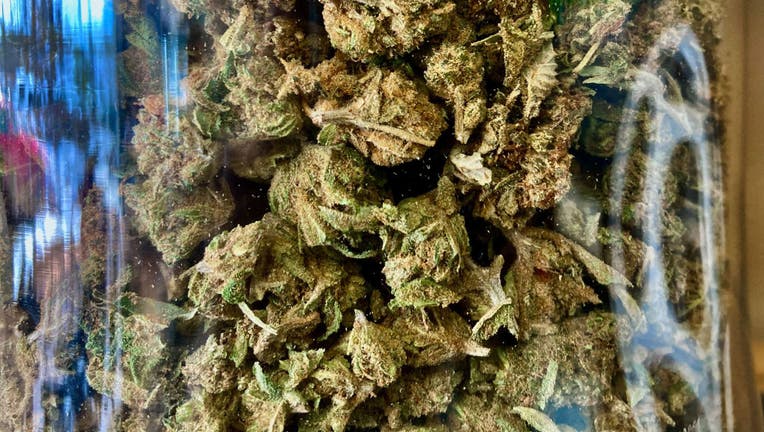
Product on display inside Embrace CBD, owned by Nicholas Patrick in Baltimore on May 12, 2022. Delta-8 gives a different, less-potent high than medical cannabis, he said. (Karl Merton Ferron/Baltimore Sun/Tribune News Service via Getty Images)
A coalition of hemp businesses and a retired police officer filed a federal lawsuit on Friday against Texas state and local officials, seeking to halt an executive agency rule that reclassifies popular hemp-derived products as Schedule I controlled substances.
Hemp businesses sue Texas over THC rules
What we know:
The lawsuit, filed in the U.S. District Court for the Southern District of Texas, challenges a regulation republished by the Texas Department of State Health Services (DSHS). Under the rule, which went into effect Friday, non-delta-9 tetrahydrocannabinols (THCs)—including hemp-derived delta-8 THC—are listed alongside illegal Schedule I drugs.
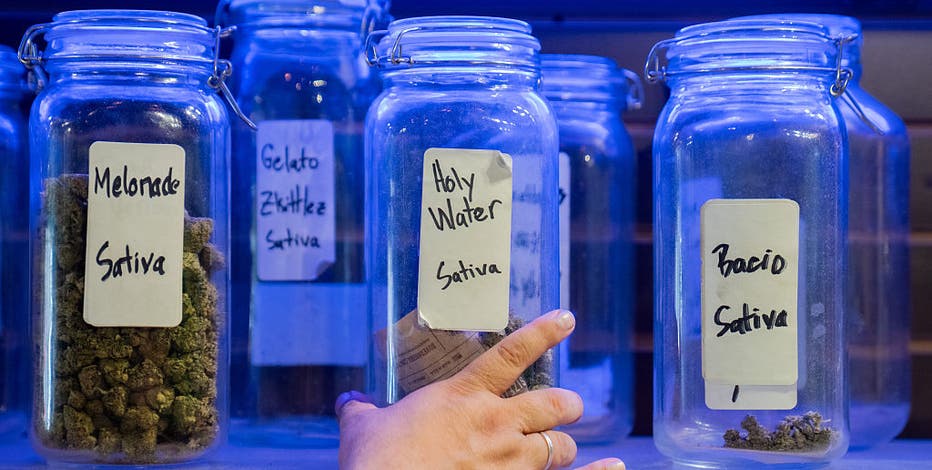
New Texas THC rules in effect
After months of back-and-forth in court, new THC rules are set to go into effect Friday in Texas.
Plaintiffs in the case include Illinois-based manufacturer Lifted Liquids, Inc., Austin-based retailer The Happy Cactus Apothecary LLC, and Thomas Monti, a retired police officer residing in Galveston County who uses and sells consumable hemp products.
Plaintiffs cite constitutional and statutory violations
The complaint asserts that the state agency rule violates both federal and state law. When Congress passed the Agriculture Improvement Act of 2018, it defined hemp as any part of the Cannabis sativa L. plant with a delta-9 THC concentration of no more than 0.3% on a dry-weight basis, explicitly removing those products from the federal Controlled Substances Act. The Texas Legislature enacted identical statutory standards under House Bill 1325 in 2019.
Attorneys for the plaintiffs argue that DSHS exceeded its administrative authority by creating a conflict between state statutes and agency regulations. The suit claims the rule violates the Due Process Clause of the Fourteenth Amendment because it fails to provide fair notice to business owners, consumers, and law enforcement regarding what constitutes contraband.
Additionally, the suit argues the rule violates the Supremacy Clause and the Commerce Clause of the U.S. Constitution by disrupting national supply chains and infringing on federal protections for interstate transport.
Texas hemp ban enforceable while legal challenge plays out, court rules
The ban on many hemp products being sold in Texas can be enforced while a legal challenge plays out, a court has ruled.
Emergency order sought
Along with the complaint, the plaintiffs filed an emergency motion for a temporary restraining order to block state health officials, the Texas Attorney General, and local prosecutors from initiating arrests, property seizures, or civil enforcement actions while the case proceeds.
State officials named in the suit have not yet filed a formal response in federal court.
The Source: Information in this article is from the lawsuit filed in the Southern District of Texas Galveston Division.