

What's behind the growing number of bear encounters in the US this year
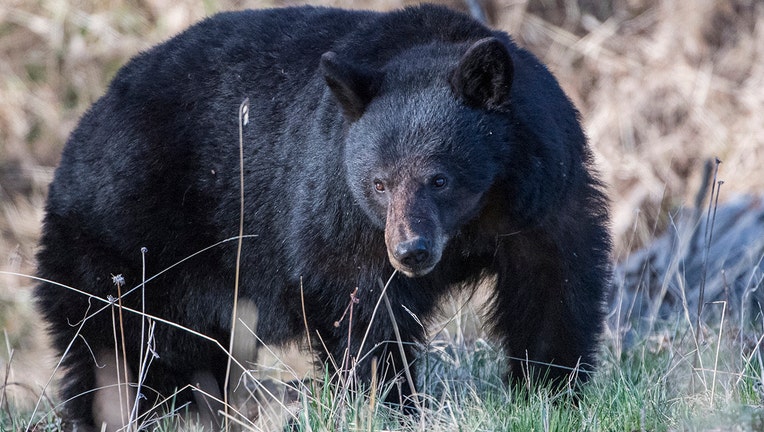
A Black bear forages for food near a stream on May 18, 2024 in Yellowstone National Park, Wyoming. (Photo by Jonathan Newton/Getty Images)
Bear encounters with humans are on the rise, especially in the Rocky Mountains, where the summer drought has bears seeking food in urban areas, leading to encounters with humans.
Dig deeper:
Officials in Colorado report there have been twice as many bear sightings and conflicts with humans this year compared with the average, including bears roaming where they aren’t normally found. In both New Mexico and Utah, wildlife managers report a record number of hungry bears have lost their natural hesitancy to raid homes, cars and campgrounds.
In Gold Hill, Colorado, north-west of Denver, Patrick Sullivan was up feeding his infant son at 3 a.m. one night this summer when he heard non-stop honking from a car. Turns out a black bear had opened the door of a Toyota SUV and gotten trapped inside the vehicle and bumped the horn as it ripped apart the Toyota’s interior, desperately trying to escape. Sullivan’s brother-in-law eventually freed the trapped bear from the vehicle.
"It’s totaled. It’s unfit to drive," Sullivan said of the car.
In Colorado Springs recently, a bear got stuck in a car and died from the heat, and wildlife officials have killed dozens of others that could endanger people.
Bears are on the move in search of food
In Colorado, wildlife officials report twice as many bear sightings and conflicts with humans this year compared with the average, including bears roaming where they aren’t normally found. Wildlife managers in New Mexico and Utah report record numbers of hungry bears have lost their natural hesitancy to raid homes, cars and campgrounds.
What they're saying:
"Bears aren’t necessarily behaving any differently, but they are definitely increasing their activity in the places that they’re looking for food," said Travis Sauder, a state wildlife officer in southeastern Colorado.
Wildlife officials say slack bears usually stick to Colorado’s mountains and foothills, but this year they have been spotted on the plains more than an hour’s drive east of Colorado Springs.
"When they get that far east, there’s just zero natural food sources that they would be looking for, like oaks or chokecherries," Sauder said.
Wildlife officials: ‘A fed bear is a dead bear’
"A fed bear is a dead bear," is the mantra of wildlife officials.
Pet food in open garages, bird feeders, grease traps under barbecue grills, and unsecured garbage bins, are all temptations for hungry bears.
Why you should care:
According to the National Park Service, feeding bears or allowing them access to human food and garbage causes a number of problems:
- It changes the bear's behavior and causes them to lose their instinctive fear of humans. Over time, these bears may begin approaching people in search of food and may become more unpredictable and dangerous.
- Bears that obtain human food and garbage may damage property and injure people. These bears pose a risk to public safety. Often, they must be euthanized.
- Studies have shown that bears that lose their fear of people by obtaining human food and garbage never live as long as bears that feed on natural foods and are shy and afraid of people. Many are hit by cars and become easy targets for poachers.
Officials say many bears that visit populated areas are tranquilized and moved out of town, but if they start associating food with people, however, they can be euthanized.
The Utah Division of Wildlife Resources says so far this year, over three dozen bears have been killed, more than the past three years combined. In New Mexico, wildlife officials and authorized property owners have killed 187 bears, the most since 2011.
Bear encounters and what to do
In June, a man in Steamboat Springs, Colorado got an unexpected surprise when he opened the door to his truck and came face-to-face with a bear sitting in the front seat.
The incident captured on a CCTV camera showed Kerrigan initially flinching, but making several attempts to shoo away the animal.
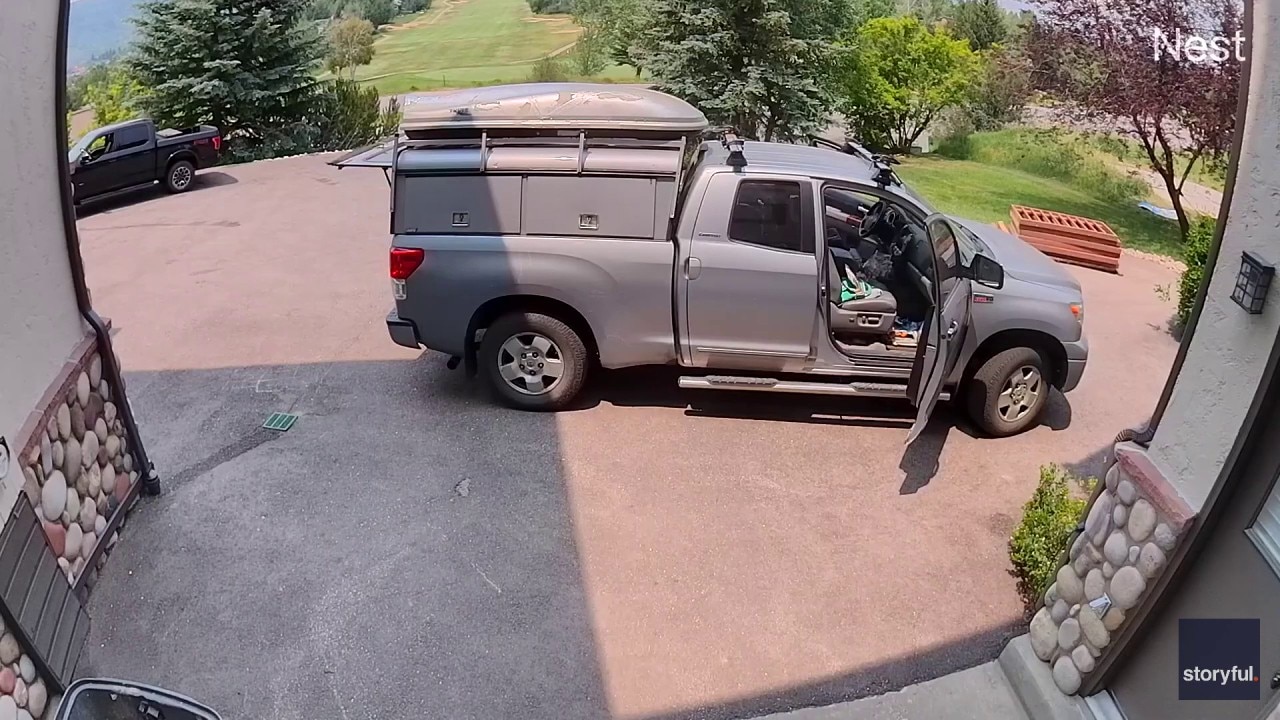
Man surprised to find bear waiting in his truck
A man in Steamboat Springs, Colorado, got a furry surprise when he found a bear in the front seat of his truck, which recently shared video shows.
He was eventually able to chase the animal out and off with a wooden plank.
In July, a Lake Tahoe man got quite the surprise after he encountered a bear outside his cabin.
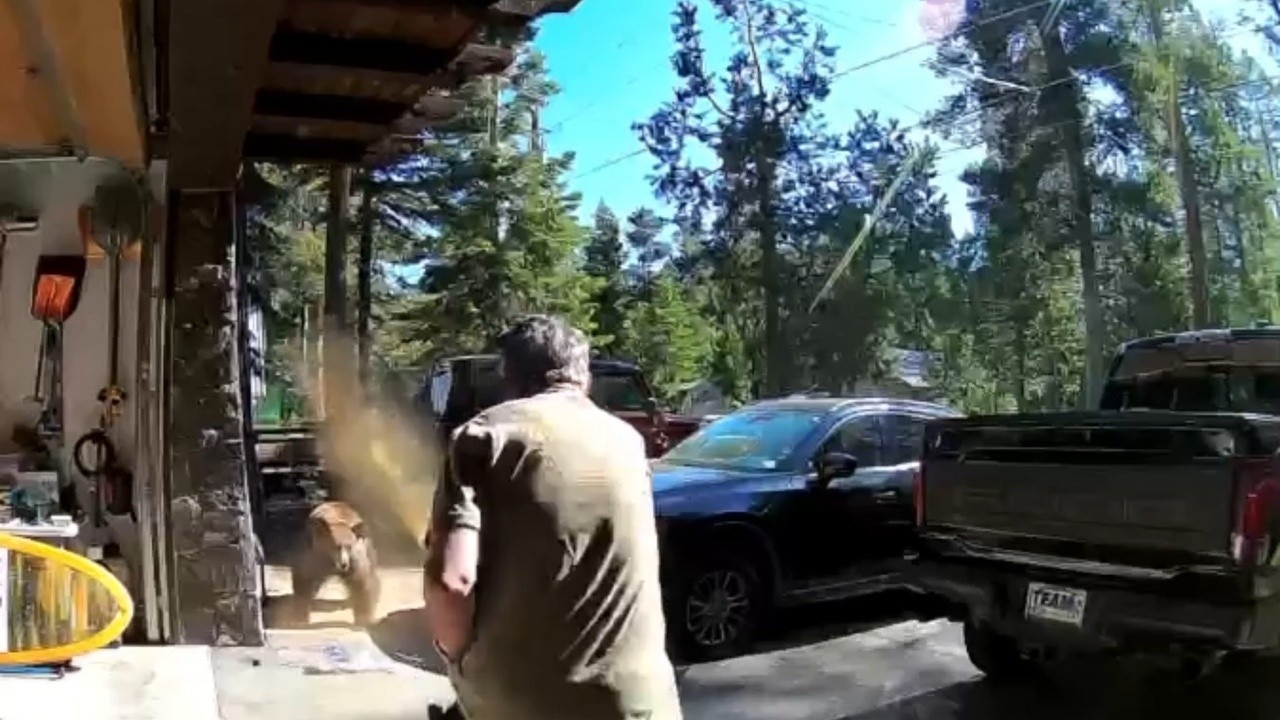
Lake Tahoe man sprays repellent at charging bear
A Lake Tahoe got quite the surprise on July 4 after he encountered a bear outside his cabin.
Koerwitz told Storyful that he was getting ready to spend a day on his boat with his family when he noticed the bear and used bear spray to deter the bear.
"I went into the garage to investigate, and had grabbed a canister of bear spray that we keep by the garage door. The bear then rushed me from the left," Koerwitz said.
How to safely use bear pepper spray
What you can do:
The National Park Service (NPS) says bear pepper spay can be used defensively to stop an aggressive, charging, or attacking bear. Although it’s used in the same way you would use mace on an attacking person, NPS says bear pepper spray and human pepper spray are not the same.
NPS says to make sure you select an EPA-approved product that is specifically designed to stop aggressive bears. It is not a repellent, so do not apply to your body or equipment.
The Source: This article includes information from The Associated Press and previous FOX Local reporting. This story was reported from Orlando.