

How to stop pumpkin rot: 5 tips to make your jack-o'-lantern last longer
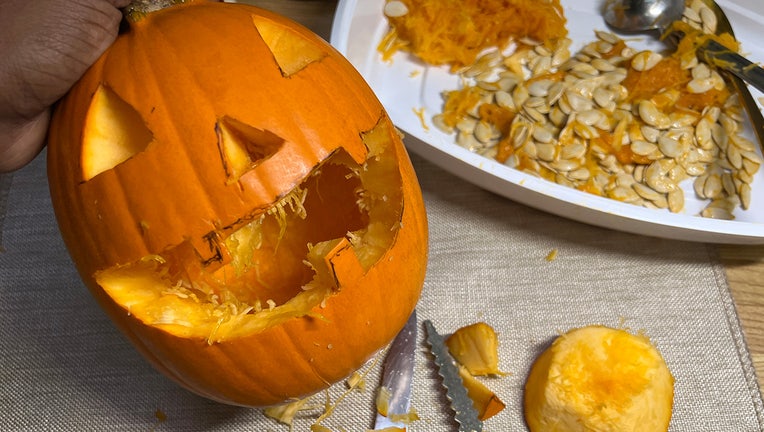
Woman carves a pumpkin in preparation for Halloween in Toronto, Ontario, Canada, on October 29, 2023. (Photo by Creative Touch Imaging Ltd./NurPhoto via Getty Images)
With less than two weeks to go until Halloween, the time is ripe to start thinking about the pumpkin-headed face that will greet trick-or-treaters on All Hallows’ Eve. Unfortunately, all that work of scooping out the seeds and cutting out the jack-o’-lantern design can start to feel like a waste in just a matter of days as it starts to go bad.
What you can do:
On the bright side, there are some steps that will help preserve that scary face and keep it from starting to look like it is melting for a little longer. Much of the solution comes from understanding what is happening and knowing how to stop it.
The backstory:
"A lot of people get grossed out when they see their produce or their seasonal gourds start to decay, but that's just life. And the microbes that are breaking them down are just doing their jobs," West Virginia University’s Dr. Matt Kasson explained. He noted that fungi and microbes breaking down the pumpkins is part of the cycle of life.
What they're saying:
Kasson pointed out that pumpkins are largely water, and microbes thrive in wet conditions. He went on to compare the purpose of the pumpkin’s rind to the benefits of a person’s skin, as well as the consequences of either being damaged.
"Why does puncturing your skin with a nail cause an infection? Let's think about what skin does for us. It protects us against water loss and pathogens," he continued. "It's no different for the rind of a pumpkin. It protects it from pathogens getting in and water getting out."
RELATED: Top Halloween candies by state for 2026
Cut out the carving
A pumpkin can serve as a decoration well past Halloween, Kasson added. A pumpkin is simply a winter squash and people leave those out as decorations throughout the fall. So, one idea for getting the most use from a pumpkin as a decoration is to skip the knife and grab a marker instead. Draw a spooky image on it to protect the rind, then turn the pumpkin around after Halloween to brighten doorsteps and homes well into autumn.
Additionally, not slicing open the pumpkin and scooping out the innards means our woodland friends can get a treat at a time of the year when finding food is getting harder and harder.
"You're also able to keep them beyond Halloween," Kasson said. "You think about Thanksgiving and that time, it's still normal to have these kind of winter squash out. So, by not carving them and not drawing spooky faces on them, you can retain them through Thanksgiving and then put them out for deer or other animals that might benefit from them."
RELATED: Here are 2026’s hottest Halloween costumes, as ranked by Google searches
Protecting the pumpkin
Pumpkin carving, though, is a tradition for many, as well as a fun and memorable activity for the family to do together. For those looking forward to carving their pumpkins, there are still ways to enjoy that artwork longer, and they tend to rely on protecting the jack-o’-lanterns from those pesky microbes.
What you can do:
The first step in making a jack-o’-lantern last longer comes even before someone picks up a knife. Multiple experts recommend thoroughly cleaning the pumpkin before starting to get rid of all the soil, debris, and microbes. Virginia Cooperative Extension horticulture expert Ashley Edwards recommended on the Virginia Tech website rinsing the pumpkin in a 10% bleach solution, an idea echoed by Kasson.
Next, because fighting microbes is the goal, it is time to take a page from operating rooms, where preventing them from infecting patients is essential. All the equipment that will be used to carve the pumpkins should be sterilized. SDSU Extension Horticulture and Specialty Crops Field Specialist Nick Volesky said this is especially important when carving multiple pumpkins.
Bonus Tip:
Now, it is time to start carving. But, before making that first cut, consider slicing from the bottom rather than the top. Not necessarily to make the pumpkin last longer. Rather, as Fox & Friends lifestyle expert Limor Suss explained, scooping out the pumpkin is not as hard from that side, and it leaves the stem attached to make the jack-o’-lantern easier to carry.
RELATED: McDonald's 2026 Halloween Boo Buckets return with a Disney villains makeover
Keep on scooping
With the pumpkin open, be sure to remove as much of the fibrous material and as many seeds as possible. Not only is scooping out all that slimy gunk fun for many kids (and kids at heart), it reduces the surface area for microbes and pathogens to grow. Kasson offered a reminder that those seeds could be cooked for a fall treat or left out for deer and other animals to have their own snacks.
Final steps
With the carving done, it is time to lock in as much moisture as possible so that new pumpkin art can last. Another bleach bath will help knock out any remaining microbes or pathogens that survived the carving process. Plus, some petroleum jelly can slow down the drying process, Volesky said.
Now, it is time to show off the jack-o’-lantern. According to Volesky, keeping it in a place that is between 50 and 60 degrees provides a happy medium where it is not warm enough to accelerate microbial growth nor cool enough to damage the pumpkin. While there’s nothing that can be done about Mother Nature and what the temperature is outside, using a battery-operated candle or glow stick to light it up, rather than a candle, keeps the inside from getting too warm and potentially speeding up the spoiling process.
Pumpkin carving tips
- Before starting, clean the pumpkin thoroughly, and consider using a bleach solution, to eliminate soil, debris, and microbes.
- Sanitize all the tools that will be used to carve the pumpkin.
- Scoop out as many seeds and as much of the fibrous material as possible.
- After being carved, use petroleum jelly to seal in the moisture and a bleach solution to kill microbes.
- Use a battery-operated candle or glow stick instead of a traditional candle to keep the inside from getting too warm.
The Source: Information for this article was taken from WVU Davis College of Agriculture and Natural Resources’ Dr. Matt Kasson, San Diego State University, Utah State University, Virginia Tech University, Fox & Friends, and the Associated Press. This story was reported from Orlando.