

First 2025 commercial case of bird flu reported in Texas
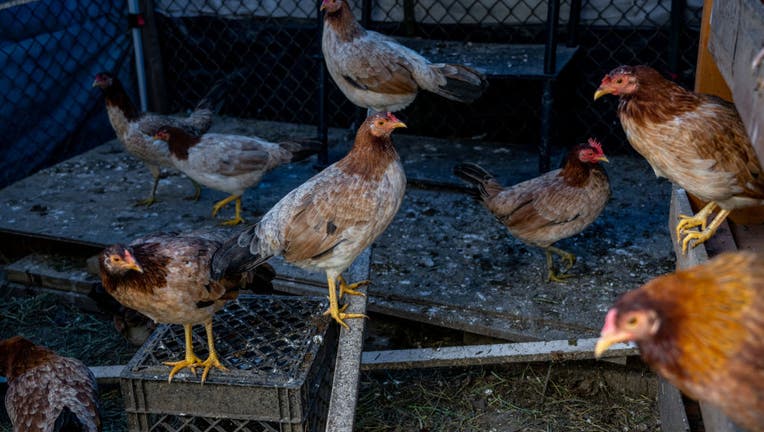
(Photo by Brandon Bell/Getty Images)
SHELBY COUNTY, Texas - State and federal officials have confirmed the presence of highly pathogenic avian influenza (HPAI) in a commercial poultry flock in Shelby County, marking the first confirmed case in a Texas commercial facility this year.
What we know:
The Texas Animal Health Commission (TAHC) and the U.S. Department of Agriculture’s Animal and Plant Health Inspection Service (APHIS) announced the positive confirmation on Friday.
Samples from the flock were submitted to a Texas A&M Veterinary Medical Diagnostic Laboratory after the birds experienced "considerable mortality," and the HPAI diagnosis was confirmed on December 11, 2025.
State officials have immediately quarantined the affected premises. The TAHC is working with federal animal health officials on a joint incident response, which includes conducting surveillance in areas surrounding the affected flock to monitor for further spread.
What is Bird Flu?
Avian Influenza (AI), or bird flu, is a contagious viral disease caused by influenza type A viruses. It poses a major threat to the poultry industry, with migratory waterfowl and other waterbirds serving as a natural reservoir.
The virus is classified into two main types based on severity:
- Low Pathogenic Avian Influenza (LPAI): Generally causes only minor illnesses.
- Highly Pathogenic Avian Influenza (HPAI): The current strain found in Shelby County. It spreads rapidly and has a high death rate in birds.
Where is Shelby County?
Shelby County is located on the easternmost boundary separating Texas and Louisiana. It is southwest of Shreveport, Louisiana, and southeast of Tyler, Texas.
What are the symptoms of bird flu?
Birds infected with HPAI may exhibit various symptoms, including neurological signs like incoordination or stumbling, lethargy, trembling, seizures, a lack of fear of people, coughing, sneezing, and sudden death.
The virus may spread through contact with infected wild and domestic birds, as well as by contaminated equipment, clothing, and shoes.
Additionally, several mammal species are highly susceptible to HPAI, primarily through the consumption of infected animal carcasses and contaminated equipment. This includes domestic cats, skunks, foxes, raccoons, bobcats, mountain lions, and black bears.
Is the public at risk of bird flu?
According to the U.S. Centers for Disease Control and Prevention (CDC), the H5N1 avian influenza viruses currently circulating in birds are believed to pose a low risk to the public in the United States.
However, the public should take basic protective measures if contact with wild animals cannot be avoided.
- Food Safety: Authorities recommend the proper handling and cooking of all poultry and eggs to an internal temperature of 165 degrees as a general food safety precaution.
- Health Warning: If you have contact with an HPAI-positive animal and develop signs of illness, immediately contact your health care provider and inform them about the exposure.
What producers and bird owners need to do
What they're saying:
"All bird owners should consider how they can keep their flocks healthy through enhanced biosecurity practices," said Dr. Bud Dinges, TAHC executive director and state veterinarian. "Ensuring barriers between wild birds are established is critical. Watch birds closely for signs of illness and report sickness or unexpected deaths immediately."
The TAHC recommends the following for all Texas poultry producers:
- Report Illness: Closely observe and report sudden increases in the number of sick birds or bird deaths to the TAHC at 1-800-550-8242 or APHIS at 1-866-536-7593.
- Biosecurity: Practice good biosecurity with poultry and all other animals interacting with the flock.
- Prevent Contact: Prevent contact between domestic birds and wild birds. Consider bringing birds indoors to further prevent exposures.
- Hygiene: Avoid visits to other premises with susceptible animals and wash hands before and after handling birds.
Wildlife rehabilitators are advised to be cautious when intaking wild animals with clinical signs consistent with HPAI, quarantine animals to limit exposure, and contact the Texas Parks and Wildlife Department (TPWD) within 24 hours of intake if HPAI is suspected.
The Source: Information in this article is from the Texas Health Commission and Texas Parks and Wildlife.