

Army selects Central Texas military base for nuclear microreactor deployment
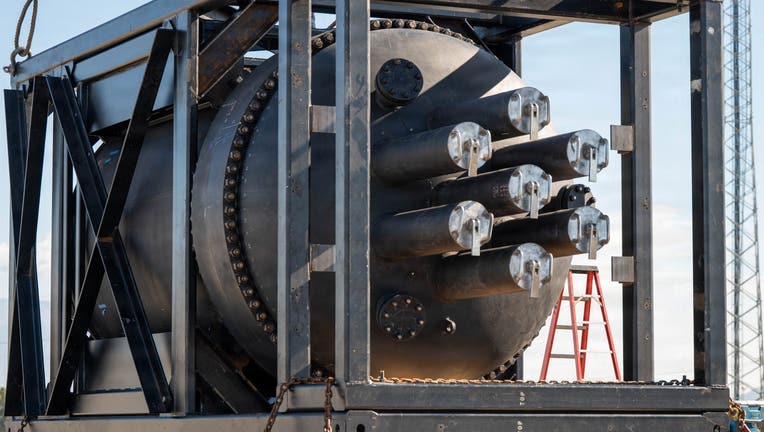
A containerized nuclear power reactor sits secured within a reinforced steel transport frame at March Air Reserve Base, California, Feb. 13, 2026. The system is part of an interagency demonstration evaluating the feasibility of rapidly deploying nucl
The U.S. Department of Defense announced that Fort Hood has been selected as one of five Army installations where companies will develop and operate nuclear microreactors intended to provide reliable power for the military base.
Army selects Texas base
What we know:
General Atomics Electromagnetic Systems was selected as a vendor for the Fort Hood project under the Army’s Janus Program. The program aims to strengthen energy resilience at military installations and the prototype reactors would be owned and operated by the contractors, according to the Army.
The Army is awarding up to $2.2 billion through the fiscal years of 2027 through 2031 to five nuclear energy companies chosen for the program.
Private-sector investment is also expected, and the Army said it ultimately plans to build and operate more than 20 microreactors at Defense Department installations. The other initial sites are:
- Fort Bragg, North Carolina
- Fort Campbell, Kentucky
- Fort Benning, Georgia
- Fort Drum, New York
Off-grid power to protect military operations
What they're saying:
Army officials said the reactors are intended to provide secure, reliable baseload power without relying solely on outside electrical grids, which could be vulnerable during emergencies or attacks. The Army evaluated possible sites based on factors including energy needs, seismic and water-related considerations, with safety as its primary focus.
"Awarding these contracts accelerates our ability to deliver safe, reliable baseload power directly to our installations. We are building the energy resilience necessary to project combat power globally, without relying on potentially vulnerable external grids," said Dan Driscoll, Army secretary.
What's next:
The first reactor is targeted to begin operating by September 2028 under an executive order cited by the Army. Additional military sites are expected to be announced later.
The Source: Information in this article was provided by the U.S. Department of Defense.