

Rodney Reed: Supreme Court denies appeal from longtime Texas death row inmate
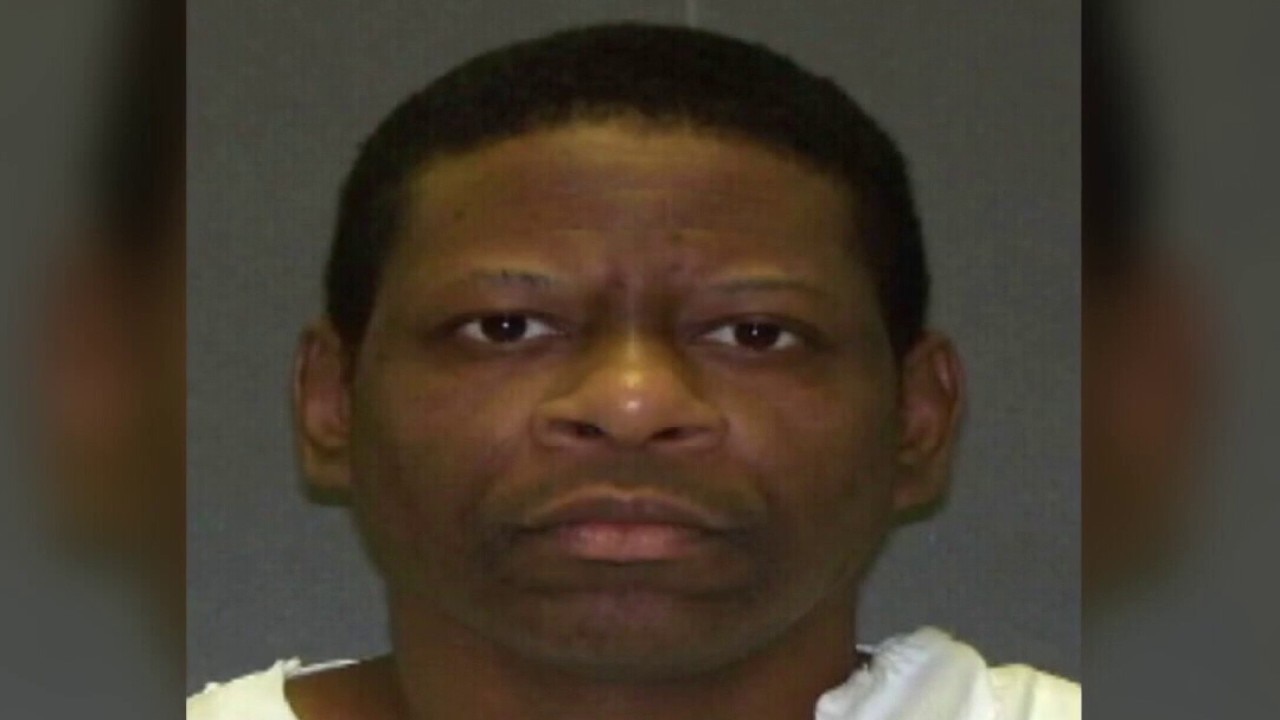
Rodney Reed conviction upheld by Supreme Court
The U.S. Supreme Court weighs in on a plea for new DNA testing for Rodney Reed.
WASHINGTON, D.C. - The Supreme Court has denied an appeal by Texas death row inmate Rodney Reed related to DNA testing he says could prove his innocence.
Reed, 56, has been on death row for over 25 years after being convicted for the 1996 murder of Stacey Stites in Bastrop.
The Court ruled 6-3, with Justices Sonia Sotomayor, Elena Kagan and Kentanji Brown Jackson publishing a dissenting opinion.
RELATED COVERAGE: Supreme Court rejects Rodney Reed's request to review claim for new trial
What we know:
The opinion was issued on March 23 and was related to a Fifth Circuit ruling about a Texas statute regarding DNA testing evidence post-conviction.
In the dissenting opinion, Justice Sotomayor outlines Reed's central arguments for the appeal, including the fact that he was denied DNA testing due to "contamination" of the murder weapon, a webbed belt belonging to Stites.
"A significant amount of the killer’s DNA is likely to be on the belt because the killer, in an act of ‘great force,’ used the belt to strangle Stites for 'approximately three to four minutes'," says the opinion. "If that DNA is either solely Reed’s or solely Fennell’s, that finding could finally resolve the 'pall of uncertainty over Reed’s conviction'."

Rodney Reed should not be retried in murder case, judge says
Rodney Reed was sentenced to death for the murder of 19-year-old Stacey Stites, whose body was found in Bastrop in 1996.
Reed's initial request for DNA testing was blocked by the Bastrop County District Attorney.
Reed then appealed in state court for testing under Article 64, Texas's postconviction DNA-testing statute, but was denied by both the trial court and the Court of Criminal Appeals.
The trial court had found that the belt was "contaminated" after being "handled by ungloved attorneys, court personnel, and possibly the jurors," according to the opinion.
Reed then sued in federal court, arguing that the ruling violated his 14th Amendment right to due process because it put "arbitrary limitation[s] on
. . . potential ‘exculpatory results’" despite advances in DNA testing.
That complaint was dismissed by the District Court, then affirmed by the Fifth Circuit, before finally being dismissed again by the Supreme Court.
What they're saying:
Sotomayor's opinion holds that the Fifth Circuit did not fully address all of Reed's arguments, or address the fact that due to advances in DNA testing, the noncontamination requirement of Article 64 "serves no legitimate purpose."
At the end of the opinion, Sotomayor says:
"It is inexplicable why the Bastrop County District Attorney’s Office refuses to allow DNA testing of the belt that was used to kill Stites, despite the very substantial possibility that such testing could exculpate Reed and identify the real killer. It is also inexplicable why the courts below did not proceed with more caution and carefully consider each of Reed’s arguments, especially given that his claim implicates the ‘constitutionally intolerable’ possibility of the 'execution of a[n] . . . innocent person'."
Who is Rodney Reed?

FOX 7 Austin 2015 Rodney Reed interview
In 2015, FOX 7 Austin sat down to interview Reed. You can watch the full thirty-minute interview below as Reed talks about the trial, his family, and the emotions he has faced since being sentenced to death.
The backstory:
Reed was sentenced to death in 1998 for the 1996 murder of Stacey Stites, who was strangled and left on a Bastrop County road.
Reed has always maintained his innocence and has instead pointed to Stites' ex-fiance and former cop, Jimmy Fennell, as her killer.
Fennell was considered a suspect in the original investigation, but ultimately, Reed was charged after his semen was found in and on Stites’ body.
Reed claims he and Stites were having an affair and that Fennell was angry about the interracial relationship, even confessing to a fellow inmate about the murder while in prison on an unrelated sexual assault conviction, says the opinion.

SCOTUS rejects Rodney Reed's request
The U.S. Supreme Court has rejected Rodney Reed's request to review his claim for a new trial.
He was scheduled to be executed in November 2019, but the Texas Court of Criminal Appeals stayed the execution and sent his case back to a lower court to review new claims, including that Reed was innocent.
However, after a 2021 evidentiary hearing, the district judge ruled against granting Reed a new trial.
Reed's case has drawn the support of celebrities such as Kim Kardashian West, actress/activist Alyssa Milano, singers Rihanna, Meek Mill and Beyoncé and presidential candidates Pete Buttigieg and Kamala Harris.
The Source: Information in this report comes from the US Supreme Court and previous reporting by FOX 7 Austin