

Meet Bolt, the TSA's cutest canine for 2026
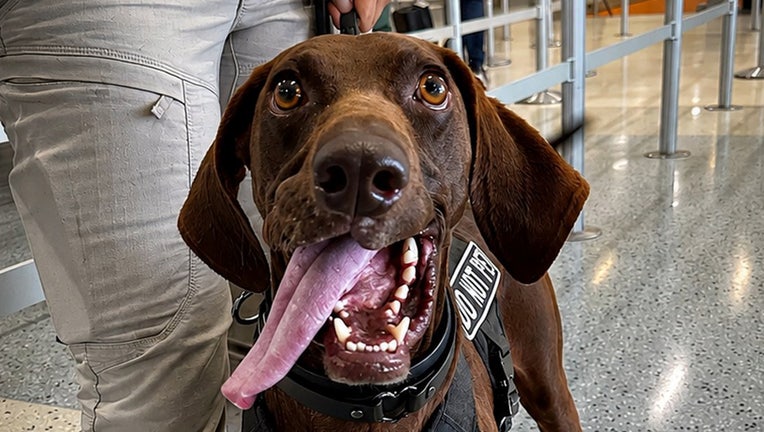
Bolt (TSA)
Bolt, the aptly named German shorthaired pointer who sniffs for bombs at Dallas Fort Worth International Airport, has been named TSA’s top dog for 2026.
The Transportation Security Administration announced the big win Wednesday after a nationwide Cutest Canine Contest on social media. Bolt was among four finalists that the public voted on after TSA narrowed it down from 85 canine nominees.
"He’s a flash of lightning and a little bit goofy," TSA said on X.
Meet Bolt
What they're saying:
Bolt’s handler, Daphne Wang, described her coworker as "such a character and a hard-working little guy."
RELATED: TSA updates medical marijuana travel guidance for air passengers
"He absolutely loves his job and coming to work," Wang said. "I am so happy he gets to show the world his quirky personality. It’s definitely an adventure working with Bolt every day. There is nothing ordinary about him. He works hard and plays even harder. He is always in working mode, even at home. He is never short on energy and is always 1,000% excited to go to work."
By the numbers:
TSA says Bolt is the third German shorthaired pointer to win Cutest Canine Contest in the past four years.
"This recognition is a fun way to celebrate the extraordinary work of our canine teams and the strong bond between each canine and handler," TSA Administrator David P. Cummins said in a statement.
"Explosives detection canine teams are one of TSA’s most effective and visible layers of security. These highly trained dogs and their handlers help detect threats in dynamic transportation environments, deter potential attacks and give travelers confidence that TSA is using proven, adaptable capabilities to protect the traveling public."
The backstory:
TSA first used explosives detection canine teams in March 2008 to screen air cargo, then expanded the program to passengers in 2011.
The canine teams move through security lines and exhibit subtle changes in behavior if they detect an explosive.
The Source: This report includes information from the Transportation Security Administration.