

CDC ends universal COVID vaccine recommendation, leaves decision to patients
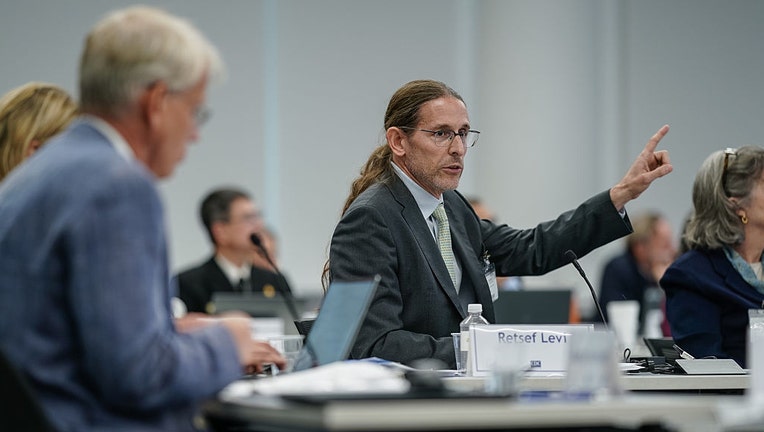
Retsef Levi discusses the findings oif a work group regarding COVID-19 vaccines during a meeting of the CDC's Advisory Committee on Immunization Practices on September 19, 2025 in Chamblee, Georgia. (Photo by Elijah Nouvelage/Getty Images)
NEW YORK - The Centers for Disease Control and Prevention has accepted recommendations from a new panel of vaccine advisers and will no longer recommend COVID-19 shots for anyone, instead leaving the decision to individual patients.
The government health agency on Monday announced it had adopted recommendations made last month by advisers picked by U.S. Health Secretary Robert F. Kennedy Jr.
RELATED: RFK Jr.'s vaccine panel changes COVID-19 shot guidelines
The backstory:
Before this year, U.S. health officials — following recommendations by infectious disease experts — recommended annual COVID-19 boosters for all Americans ages 6 months and older. The idea was to update protection against the coronavirus as it continues to evolve.

CDC advisory panel changes vaccine recommendations
KFF's Dr. Jennifer Kates joins LiveNOW's Mike Pache to discuss a CDC advisory panel's vote to restrict COVID-19 vaccine recommendations to people older than 65 and those with underlying medical conditions.
As the COVID-19 pandemic waned, experts increasingly discussed the possibility of focusing vaccination efforts on people 65 and older — who are among those most at risk for death and hospitalization.
What they're saying:
But Kennedy, who has questioned the safety of COVID-19 vaccines, abruptly announced in May that COVID-19 vaccines were no longer recommended for healthy children and pregnant women. He also dismissed the CDC’s Advisory Committee on Immunization Practices and replaced them with a handpicked group.
RELATED: RFK Jr.'s advisory panel recommends new restrictions on MMRV vaccines
Dig deeper:
The new group voted last month to say all Americans should make their own decisions. But the CDC also says vaccine decisions, especially for seniors, should involve checking with a doctor, nurse or pharmacist.
The recommendation was endorsed by Deputy Secretary of Health and Human Services Jim O'Neill, who is serving as the CDC’s acting director. O’Neill signed off on it last week, but HHS officials announced it Monday.

Senators grill RFK Jr. on CDC shake-up
Fox News Radio's Ryan Schmelz joins LiveNOW's Christina Evans to recap HHS Secretary Robert F. Kennedy Jr.'s testimony on Capitol Hill Thursday.
The panel also urged the CDC to adopt stronger language around claims of vaccine risks, despite pushback from outside medical groups who said the shots had a proven safety record from the billions of doses administered worldwide.
In a statement Monday, O’Neill celebrated the change, saying past guidance "deterred health care providers from talking about the risks and benefits of vaccination."
"Informed consent is back," O'Neill said in a statement some doctors objected to.
Doctors routinely discuss vaccines with patients and parents, and share printed information about the risks and benefits of each shot, said Dr. Jesse Hackell, a retired New York physician who has coauthored several American Academy of Pediatrics policy statements on vaccinations.
"To make a statement that informed consent is back implies that it had gone away. In no way has it gone away," he said.
The other side:
Major medical societies continue to recommend shots for younger children, pregnant women and others at higher risk of severe illness. They say the Trump administration's discussion of risk overemphasizes rare side effects and doesn't account for the dangers of coronavirus infection itself.
The decision clears the government’s Vaccines for Children program to ship COVID-19 vaccine doses. The program provides routine vaccinations at no cost to children whose families qualify.
Big picture view:
O’Neill also signed off on a panel recommendation that children under 4 get their first vaccine dose for varicella — also known as chickenpox — as a standalone shot rather than in combination shot with measles, mumps and rubella.
There is a single shot that contains all four, but it carries a higher risk of fevers and fever-related seizures. Since 2009, the CDC had said it prefers separate shots for initial doses of those vaccines and 85% of toddlers already get the chickenpox vaccine separately.
The Source: The Associated Press contributed to this report. Information in this story comes from official announcements by the Centers for Disease Control and Prevention and the Department of Health and Human Services. This story was reported from Los Angeles.