

Easter and Passover food safety tips: How to reduce the risk of foodborne illness
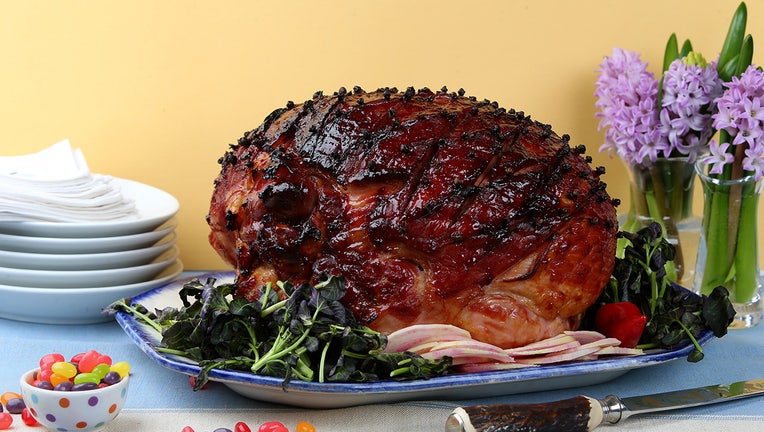
Ham with Red-Currant Chile Glaze is pictured in Watertown, MA on Mar. 8, 2016. (Photo by Jonathan Wiggs/The Boston Globe via Getty Images)
- The USDA issued reminders on the safest ways to cook some favorite springtime holiday dishes.
- Health officials warned against leaving food in the Danger Zone for more than two hours.
- With some exceptions, hams, briskets, and lamb need to get to an internal temperature of 145 degrees and sit for three minutes.
Families and friends will be gathering around the dinner table to mark Easter, Passover, Mother’s Day, and other occasions. With so many people cooking these at home, the U.S. Department of Agriculture (USDA) wants to ensure they know how to prepare them to avoid contamination by foodborne bacteria.
Why you should care:
These precautions can help prevent the food from sitting too long in what the USDA describes as the Danger Zone. In this range – between 40 and 140 degrees – bacteria can multiply rapidly. Agency officials note food should not be allowed to remain within this range for more than two hours and any food that crosses that limit should be tossed.
What you can do:
As the USDA points out, these holidays are often associated with special meals, like an Easter ham, a Passover brisket, or a Mother’s Day brunch, so its statement made special note of the precautions around those foods.
How to Cook Ham
For its ham instructions, the USDA divides the pork product into three categories: Ready-to-eat; uncooked, and ones labeled "cook thoroughly." Shoppers looking to pick up the ready-to-eat varieties should look for the USDA mark of inspection as well as a "Fully Cooked" label. Those hams need to be reheated to 140 degrees and in line with any manufacturer's directions.
Raw, fresh, and uncooked hams need to reach an internal temperature of 145 degrees. As measured by a food thermometer, and rest for three minutes before serving. If there is a "Cook Thoroughly" label on the packaging, the USDA recommends following the manufacturer's instructions and cooking the ham until its internal temperature reaches 145 degrees with the same three-minute wait.
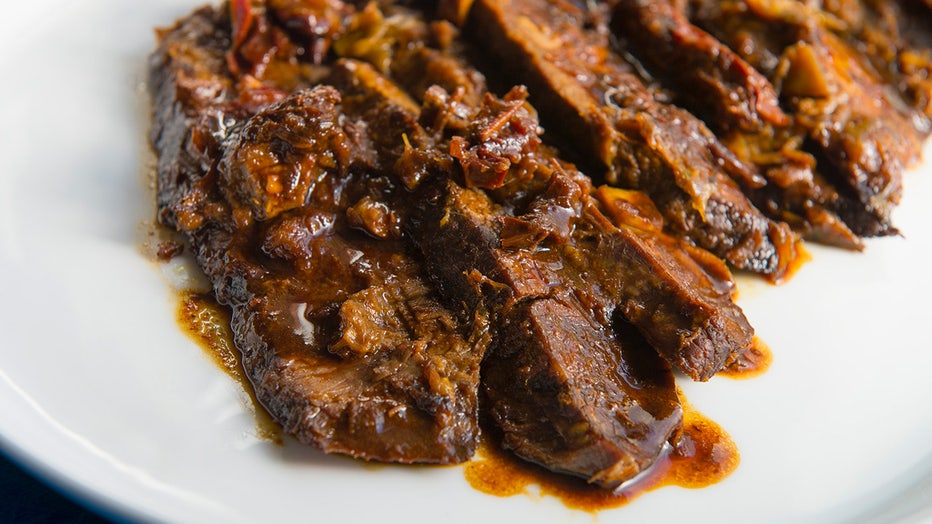
Shown is the Nash Brisket at Vered Guttman's home on March 14, 2013 in Chevy Chase, Md. (Photo by Ricky Carioti/The Washington Post via Getty Images)
How to Cook Brisket
Long before a frozen brisket goes into the oven, it is going to need to be thawed, and that can take a while. The USDA noted a trimmed, first-cut brisket can take about 24 hours to thaw, while a whole 10 lb. brisket could take several days.
Briskets will need to be cooked, fat-side up, in an oven set to at least 325 degrees until it reaches a temperature of 145 degrees and is allowed to rest for three minutes.
How to Cook Lamb
Like the previous dishes, a leg of lamb or other cuts will need to reach a temperature of 145 degrees before being served. However, ground lamb will need to get a little warmer, with the agency suggesting cooking it until it reaches 160 degrees.
How to Cook Eggs and Egg Dishes
Eggs will need to be cooked until they reach 160 degrees. Hard-boiled eggs need to be kept in the refrigerator and any other egg dish that is going to be eaten should not set out for more than two hours.
As for the eggs that will be used for Easter egg hunts, the USDA suggests making a batch to hide and a separate one for eating. If the ones that are hidden are going to be eaten, make sure to use food-grade dye.
What they're saying:
"Spring holidays are about cherished traditions—sharing Easter ham, Passover brisket, or a Mother’s Day brunch with those you love," said Under Secretary for Food Safety Dr. Mindy Brashears. "Don’t let foodborne illness spoil these special moments. Keep your loved ones safe by following the U.S. Department of Agriculture’s (USDA) Four Steps to Food Safety when preparing your favorite holiday meal."
Dig deeper:
The agency’s Four Steps to Food Safety are listed on the Food Safety Basics page of its website. The USDA recommends everyone remember these key points throughout the entire cooking process:
- Clean – Wash hands and surfaces often
- Separate – Don’t cross-contaminate
- Cook – Cook to proper temperatures, checking with a food thermometer
- Chill – Refrigerate promptly
The website also includes extra tips for every stage of the cooking process, from the initial steps like shopping and thawing to the final ones, like serving and refreezing.
Additionally, it contains a breakdown of how hot meats and leftovers should get before they are served, along with a long list of how long items can be kept in a refrigerator or freezer before they should be thrown out.
The Source: Information in this article was provided by the U.S. Department of Agriculture. This story was reported from Orlando.