

Houston rep's first US bill targets Abbott's 'weaponization' of vacant seat: 'We had no voice'

Left to right: U.S. Rep. Christian D. Menefee (D-TX) and Texas Gov. Greg Abbott (Getty Images)
HOUSTON - As his first act as the U.S. representative for part of the Houston area, Christian D. Menefee has filed a bill to force state governors to fill vacant House seats within a reasonable time frame.
The SET Act comes as a response to the Houston Democrat's own situation, after his district went without representation for nearly a year following the death of U.S. Rep. Sylvester Turner.
According to Menefee, that vacancy was weaponized by the governor to help push the Republican agenda.
Menefee files SET Act
The Special Elections Timeline Act, shortened to SET, would create a deadline for governors to call special elections to fill vacant seats in Congress. The new timeline would be 180 days if Menefee's bill is passed — a little over half the 334 days TX-18 sat empty after former Houston Mayor Turner's passing in May 2025.
What they're saying:
"Governor Abbott delayed the election, and we went almost a year with no member of Congress," Menefee said in a video posted to X, formerly Twitter, on Thursday.
"I want to make sure that that doesn't happen to any other community across this country," the representative went on.
Houston district vacancy
The backstory:
Menefee won his seat in a runoff election in early 2026. The race was competitive, with the Democrat edging out party opponent Amanda Edwards on Feb. 1. The seat had been vacant since May 5, 2025.
Why you should care:
Menefee claims the long vacancy was intentional, blaming Gov. Greg Abbott for delaying the special election specifically to protect a slim edge held by Republicans in Congress — a move the Democrat called "political weaponization of a vacancy."
What they're saying:
"(It happened) when Congress was voting on the so-called One Big Beautiful Bill," Menefee said in the video. "When they cut SNAP benefits, when they cut Medicaid access, when they voted on a budget, we had no voice in Congress."

Texas' 18 Congressional District election results: Christian Menefee wins runoff
Houston Democrat Christian Menefee has been elected to the U.S. House, filling the vacant seat in Texas' 18th Congressional District.
GOP majority in Congress
Big picture view:
The Houston Democrat's bill is the most recent move in a battle over party lines in Texas, and more broadly, the nation. Republicans have been holding on to a slim majority in both the House and Senate since Biden's midterms, and as is historically common, the minority hopes to flip Congress against the current administration.
The backstory:
The first action that made national waves related to the matter was Texas' congressional district remapping just after the end of the 2025 regular session of the state legislature. President Donald Trump encouraged Texas leaders to "pick up" five new seats for the GOP in the House by restructuring the districts. After one special session was killed by a Democratic quorum break, a second session achieved the goal. The U.S. Supreme Court has since approved the new map's use after a short rumble in the court system.
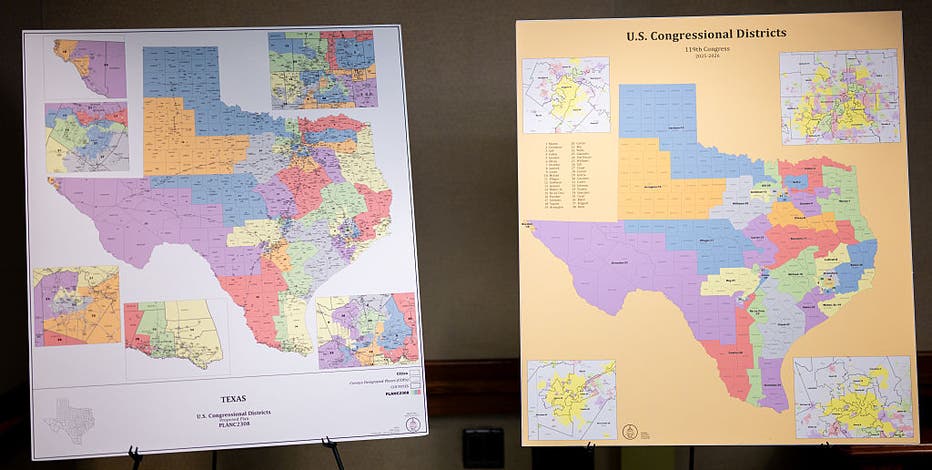
Supreme Court reinforces ruling allowing redrawn Texas congressional map
The U.S. Supreme Court has reinforced its prior decision allowing Texas to use a redrawn congressional map for the 2026 midterm elections, effectively ending legal challenges, for now, at a time of nationwide redistricting battles.
Several other states followed suit. California redrew their own maps in the opposite direction, expecting to turn five red seats blue in their midterms. To date, Missouri, North Carolina, Ohio, Utah and Virginia have joined the fray.
The latest:
This week, SCOTUS ruled on a key pillar of the Voting Rights Act, striking down a majority Black district and potentially opening the door to the elimination of Black and Latino districts that tend to favor Democrats.
What they're saying:
Critics of the ruling say it's a targeted move to weaken the left's chance at flipping majority power in the midterms. Supporters say the provision was racist to begin with, and tout it as a course-correction for voting rights in the U.S.
Featured
Supreme Court rules on key Voting Rights Act rule, voids majority Black congressional district in Louisiana
The Supreme Court on Wednesday limited the scope of a key Voting Rights Act provision that restricts how states draw districts affecting minority voters, constraining states' use of race as a factor when drawing congressional maps ahead of the 2026 midterms.
What's next:
The effectiveness of the redrawn maps remains to be seen in the general election. U.S. Sen. John Cornyn, the longtime senior Republican incumbent in Texas, is also defending his title against Texas AG Ken Paxton in a May 26 runoff. The winner of that election will face Democratic challenger James Talarico, a state rep. from the Austin area, who shows strong numbers in recent polling against either GOP contender.
The Source: Information in this article comes from statements made by public servants, and previous FOX Local coverage.