

Dallas exoneree Richard Miles honored at National Civil Rights Museum
Dallas exoneree honored at National Civil Rights Museum
Dallas native Richard Miles is now part of the National Civil Rights Museum in Memphis Tennessee for his work with people being released from prison.
MEMPHIS, Tennessee - Dallas native Richard Miles is now part of the National Civil Rights Museum in Memphis, Tennessee for his work with people being released from prison.
Miles was sentenced to 60 years in prison for a horrible, violent crime, which he was later found to not have committed. He was exonerated more than 15 years later, and since then his life's work has been helping others coming out of the justice system re-enter society.
Richard Miles in civil rights museum
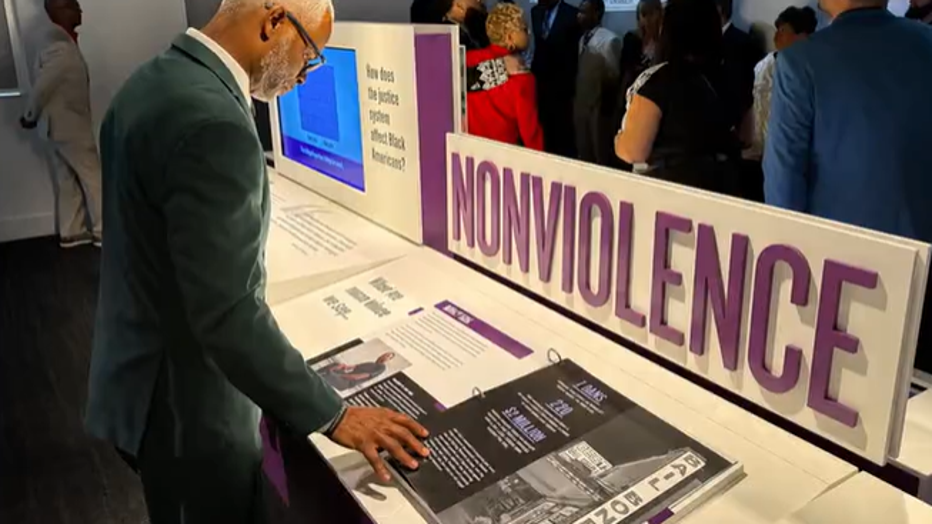
Richard Miles at National Civil Rights Museum
Miles was selected by a committee after a national search to be included in the expansion of the National Civil Rights Museum, which is also expanding what it sees as civil rights.
The museum is housed in the Lorraine Motel, where Martin Luther King, Jr. was assassinated in the fight for civil rights. It's what Miles has already done and overcome that has him and his Miles of Freedom non-profit enshrined in the historic place.
What they're saying:
"I'm just honored," Miles said, "But I'm also asking, what is that calling? What is next to do? So I am totally honored, yes sir."
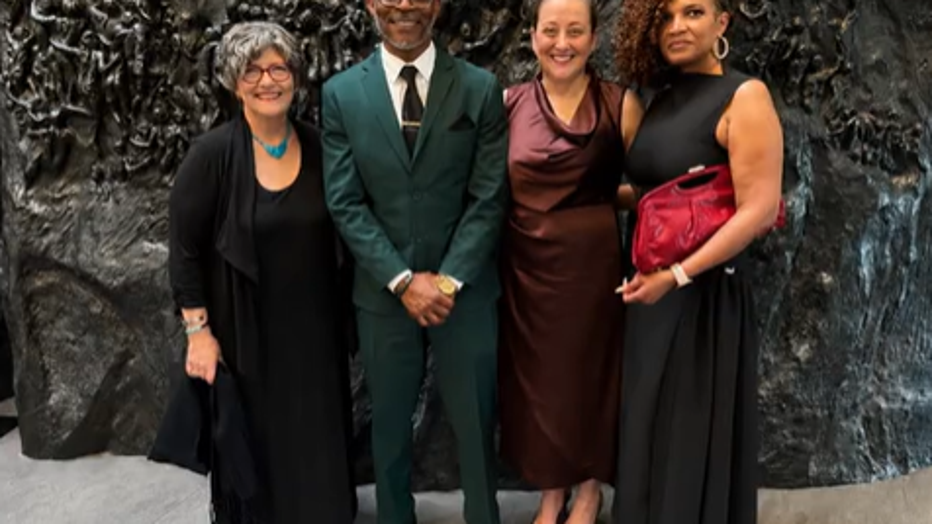
Richard Miles (second from left)
New museum expansion
The Legacy Experience at the museum is a $55 million expansion that traces forward the Civil Rights Movement from MLK Jr.'s assassination on April 4, 1968.
What they're saying:
"His work with formerly incarcerated people and his own personal story just made it one that we couldn't pass up," said Erica Harper, director of collections and exhibitions for the museum. "And thought it would be great to fit into the new legacy building."
Harper said after researching and learning about Miles, when she met him, she felt some kind of way.
"I knew the tears would come, but it was just so incredible to take in the space with Mr. Miles, and also just to stand back and watch him take it all in, because he has certainly been on a journey of his own," she said.
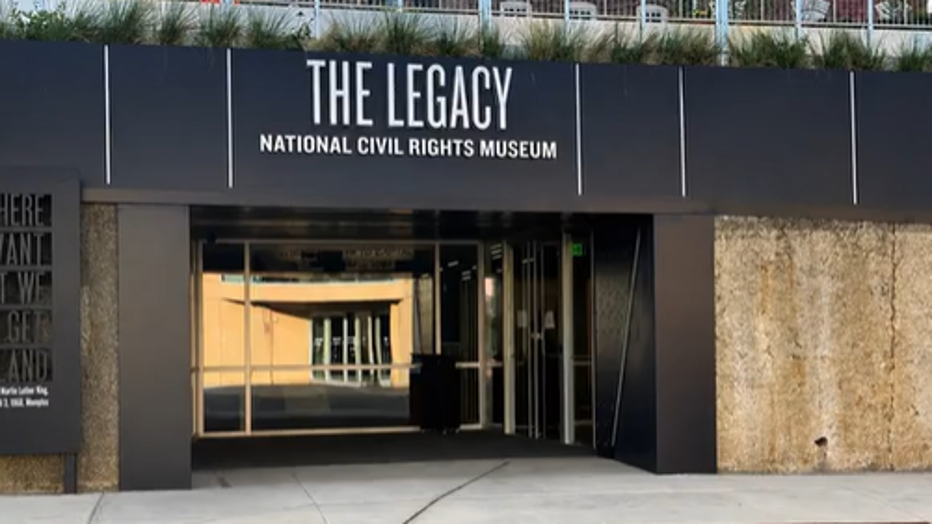
The Legacy at National Civil Rights Museum
Who is Richard Miles?
Miles' journey began at age 16, when he was tried as an adult and sentenced to 60 years in prison for a murder and attempted murder he did not commit.
It would be nearly 19 years later before he was exonerated. That's when he started Miles of Freedom to help men and women getting out of prison to stay out of prison.
While King did not see the mass incarceration of today, he did see a system that seemed unfair — scales of justice that were not balanced and the deep societal roots of crime.
What they're saying:
"Mass incarceration, while it wasn't a particular topic that he spoke about often, it involved Blacks," Miles said. "It involved our transition, and so the work of Miles of Freedom was highlighted in some type of way."

Richard Miles and Erica Harper
A work that would not be preserved in the civil rights museum — a work that likely might not have even happened had Miles not been wrongfully accused, convicted, and eventually exonerated.
"I believe that my life, Richard Miles would have always been a successful person, but I don't think my life would have been as impactful," Miles said.
Impact of Miles of Freedom
Miles has impacted many: Nearly 4,000 people coming out of prison have gone through the Miles of Freedom re-entry program.
Estimates are he has saved taxpayers over $315 million in re-incarceration costs by preventing recidivism.
The Source: Information in this article comes from interviews conducted by FOX 4's Shaun Rabb.